Description
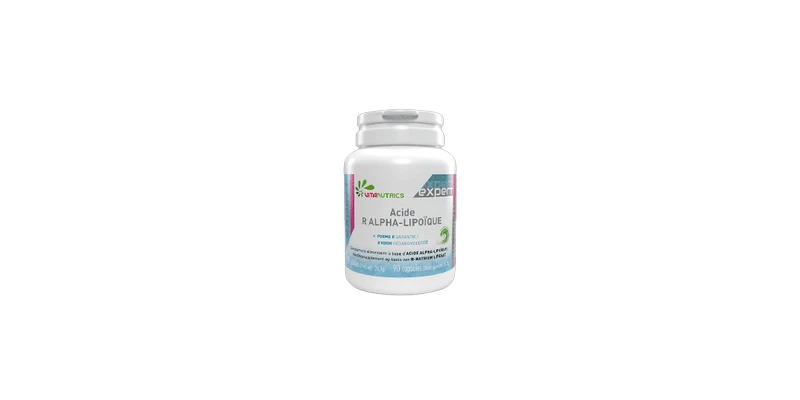
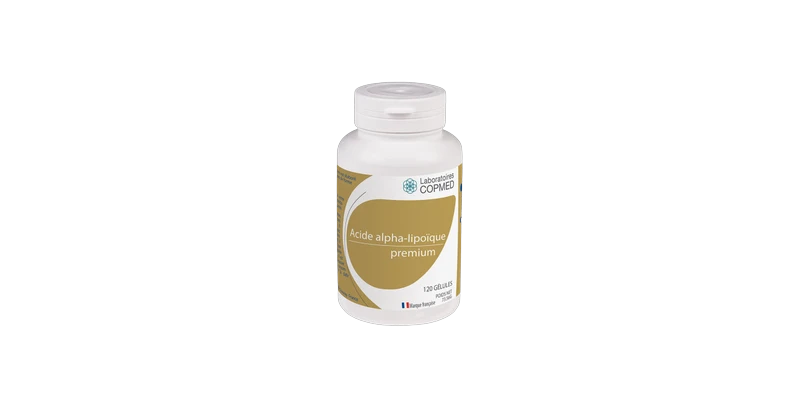
A POWERFUL ANTIOXIDANT Alpha-Lipoic Acid (ALA) is a sulphur-containing acid. It is also called the "universal antioxidant" because it is both water-soluble and fat-soluble, allowing it to neutralise free radicals in all environments of the human body. Alpha-lipoic acid is an antioxidant present in all our cells. Its primary role is to regenerate glutathione and thus help protect cells from oxidative stress. It is also involved in the Krebs cycle, which allows the cell to produce energy. It also has many other properties. It is notably used in micronutrition to help: √ Rebalance blood sugar and prevent insulin resistance √ Support neuropathies in diabetic or alcoholic individuals √ Reduce imbalances linked to metabolic syndrome √ Reduce waist circumference and improve the waist / hip ratio √ Chelate heavy metals INSULIN RESISTANCE Insulin resistance describes a situation in which cells become less sensitive to insulin. Blood sugar then remains elevated, which is characteristic of prediabetes and greatly increases cardiovascular risk. Alpha-lipoic acid can help reduce insulin resistance: it promotes the uptake of blood glucose by peripheral cells of the muscles, liver and adipose tissue through activation of a protein kinase (Phosphoinositide 3-kinase). CHELATION OF HEAVY METALS Alpha-lipoic acid protects nerve cells against the harmful effects of free radicals and toxins. Indeed, it can chelate heavy metals such as arsenic, cadmium, mercury, nickel and lead, as well as excess iron and copper. Furthermore, alpha-lipoic acid has the ability to cross the blood-brain barrier. R Form and S Form Alpha-lipoic acid, naturally present in plants, animals and the human body, is in the R form (the R+ enantiomer). However, when synthesised, it is often provided in the form of a racemic mixture containing both the R form and the S form. Yet only the R form is responsible for beneficial effects. R-Alpha Lipoic Acid is the only form that acts as a cofactor for mitochondrial enzymes, of phosphoinositide 3-kinase.