Description
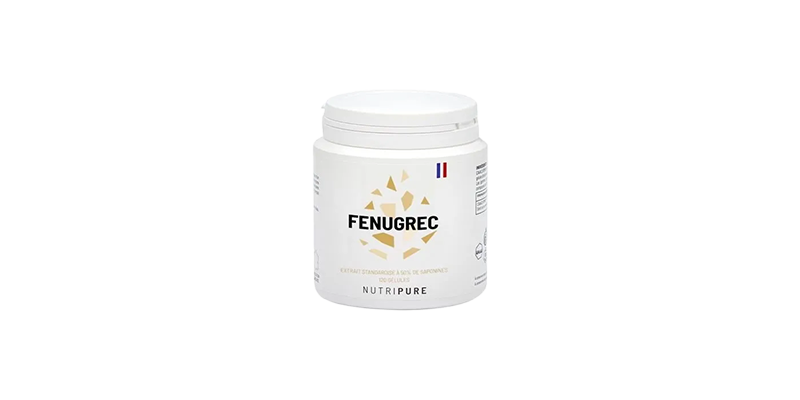
FENUGREEK AND FAT STORAGE Fenugreek is a plant from the Ayurvedic tradition that helps maintain normal blood glucose levels. Nutripure has selected a seed extract standardised to 50% saponins to guarantee its properties. √ An ancient plant with recognised properties √ Seed extract standardised to 50% saponins √ An aid for maintaining normal blood glucose levels FENUGREEK: Botanical characterisation The biological and pharmacological actions of fenugreek are due to the variety of its constituents: it contains steroids, polyphenolic substances, nutrients and amino acids. It therefore stands out from other plants due to its remarkable composition. √ The nutrients : The seeds contain 30 % protein, 20 % carbohydrates and 10 % fat. They also contain vitamins, including vitamins A, B1 and C, which are essential for the proper functioning of the body. Mineral salts are also part of its composition, such as iron, magnesium, calcium and sulphur. It also has a high phosphorus content. √ Phytochemical substances : Fenugreek is very rich in steroidal saponins and amino acids (mainly 4-hydroxy-isoleucine), which are responsible for its pharmacological properties. As it is an antioxidant food, it contains flavonoids, as well as mucilaginous fibres (galactomannans), alkaloids, lecithin and essential oils. And as with all plants made up of varied nutrients, fenugreek offers a range of benefits. Maintenance of glucose levels For people concerned about their blood sugar, fenugreek improves insulin sensitivity and helps maintain normal blood glucose levels. The components of fenugreek, including a specific amino acid: 4-hydroxy-isoleucine, act directly on blood glucose. In several animal studies, this substance stimulated insulin production and improved the body's sensitivity to this hormone. By stimulating the pancreas's endocrine secretion, this insulinotropic property has led to renewed interest in fenugreek in the treatment of diabetes. In a clinical study, non-diabetic people took fenugreek. They experienced a 13,4% reduction in blood sugar levels 4 hours after intake. However, it was fenugreek leaves that were used here. Lastly, the seed is also rich in soluble fibre, which acts on blood glucose levels by slowing digestion. As a result, the rate of sugar absorption in the intestines decreases, and fenugreek thus helps maintain normal blood glucose levels as part of a healthy lifestyle. Fenugreek's role in digestion An appetite opener, fenugreek allows for better absorption of nutrients and facilitates the digestion of food, notably due to its richness in fibre. Thanks also to its mucilaginous effect, the seed protects the intestinal lining from irritation and inflammation, thereby relieving gastritis, diarrhoea, dysentery, indigestion, peptic ulcers, etc. Mucilage, which is not absorbed by the body, increases the weight and volume of stools, providing an effective laxative effect in cases of constipation.
<style>.sc-desc{color:#3F524A;font-size:16px;line-height:1.65}.sc-desc__lead{max-width:72ch}.sc-desc__lead p{margin:0 0 14px}.sc-desc__lead p:first-child{font-size:18px;color:#14342B}.sc-desc__card{background:#fff;border:1px solid #E6EAE6;border-radius:14px;padding:22px 24px;margin-top:22px;box-shadow:0 1px 2px rgba(20,52,43,.04)}.sc-desc__card--claims{background:#F7FAF7;border-color:#DBE5DE}.sc-desc__h{margin:0 0 12px;font-size:17px;font-weight:700;color:#14342B;letter-spacing:-.01em}.sc-desc__p{margin:0 0 12px}.sc-desc__p:last-child{margin-bottom:0}.sc-desc__checks{list-style:none;margin:0;padding:0}.sc-desc__checks li{position:relative;padding:7px 0 7px 32px}.sc-desc__checks li::before{content:'';position:absolute;left:0;top:10px;width:20px;height:20px;border-radius:50%;background:#EDF2EE url("data:image/svg+xml,%3Csvg%20xmlns='http://www.w3.org/2000/svg'%20viewBox='0%200%2024%2024'%20fill='none'%20stroke='%231F6B4F'%20stroke-width='3.2'%20stroke-linecap='round'%20stroke-linejoin='round'%3E%3Cpath%20d='M5%2012.5l4.2%204L19%207'/%3E%3C/svg%3E") center/11px 11px no-repeat}.sc-desc__dots{margin:0;padding-left:20px}.sc-desc__dots li{padding:3px 0}.sc-desc__callout{display:flex;gap:14px;background:#EEF4F2;border:1px solid #D8E5E0;border-radius:12px;padding:18px 20px;margin-top:22px}.sc-desc__callout--care{background:#FBF6EC;border-color:#ECDDBE}.sc-desc__callout--care .sc-desc__h{color:#7E6418}.sc-desc__callout__icon{flex:0 0 auto;width:26px;height:26px;border-radius:50%;background:#1F6B4F;color:#fff;font-weight:700;font-size:15px;line-height:26px;text-align:center}.sc-desc__callout--care .sc-desc__callout__icon{background:#C99A2E}.sc-desc__callout .sc-desc__h{margin-bottom:8px}</style><div class="sc-desc"><section class="sc-desc__card"><h3 class="sc-desc__h">FENUGREEK AND FAT STORAGE</h3><p class="sc-desc__p">Fenugreek is a plant from the Ayurvedic tradition that helps maintain normal blood glucose levels.</p><p class="sc-desc__p">Nutripure has selected a seed extract standardised to 50% saponins to guarantee its properties.</p><ul class="sc-desc__dots"><li>An ancient plant with recognised properties</li><li>Seed extract standardised to 50% saponins</li><li>An aid for maintaining normal blood glucose levels</li></ul></section><section class="sc-desc__card"><h3 class="sc-desc__h">FENUGREEK: Botanical characterisation</h3><p class="sc-desc__p">The biological and pharmacological actions of fenugreek are due to the variety of its constituents: it contains steroids, polyphenolic substances, nutrients and amino acids. It therefore stands out from other plants due to its remarkable composition.</p><ul class="sc-desc__dots"><li>The nutrients:</li></ul><p class="sc-desc__p">The seeds contain 30 % protein, 20 % carbohydrates and 10 % fat. They also contain vitamins, including vitamins A, B1 and C, which are essential for the proper functioning of the body. Mineral salts are also part of its composition, such as iron, magnesium, calcium and sulphur. It also has a high phosphorus content.</p><ul class="sc-desc__dots"><li>Phytochemical substances:</li></ul><p class="sc-desc__p">Fenugreek is very rich in steroidal saponins and amino acids (mainly 4-hydroxy-isoleucine), which are responsible for its pharmacological properties. As it is an antioxidant food, it contains flavonoids, as well as mucilaginous fibres (galactomannans), alkaloids, lecithin and essential oils. And as with all plants made up of varied nutrients, fenugreek offers a range of benefits.</p></section><section class="sc-desc__card"><h3 class="sc-desc__h">Maintenance of glucose levels</h3><p class="sc-desc__p">For people concerned about their blood sugar, fenugreek improves insulin sensitivity and helps maintain normal blood glucose levels.</p><p class="sc-desc__p">The components of fenugreek, including a specific amino acid: 4-hydroxy-isoleucine, act directly on blood glucose. In several animal studies, this substance stimulated insulin production and improved the body's sensitivity to this hormone. By stimulating the pancreas's endocrine secretion, this insulinotropic property has led to renewed interest in fenugreek in the treatment of diabetes. In a clinical study, non-diabetic people took fenugreek. They experienced a 13,4% reduction in blood sugar levels 4 hours after intake. However, it was fenugreek leaves that were used here.</p><p class="sc-desc__p">Lastly, the seed is also rich in soluble fibre, which acts on blood glucose levels by slowing digestion. As a result, the rate of sugar absorption in the intestines decreases, and fenugreek thus helps maintain normal blood glucose levels as part of a healthy lifestyle.</p></section><section class="sc-desc__card"><h3 class="sc-desc__h">Fenugreek's role in digestion</h3><p class="sc-desc__p">An appetite opener, fenugreek allows for better absorption of nutrients and facilitates the digestion of food, notably due to its richness in fibre. Thanks also to its mucilaginous effect, the seed protects the intestinal lining from irritation and inflammation, thereby relieving gastritis, diarrhoea, dysentery, indigestion, peptic ulcers, etc.</p><p class="sc-desc__p">Mucilage, which is not absorbed by the body, increases the weight and volume of stools, providing an effective laxative effect in cases of constipation.</p></section></div>