Description
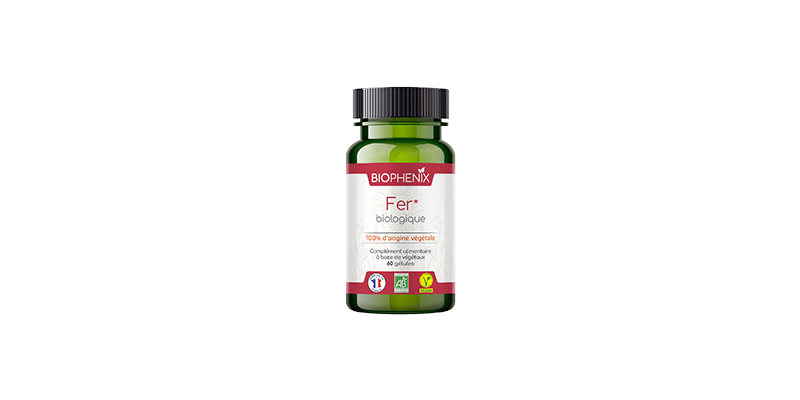
Why choose Fer Biophénix? √ The only 100% plant-based and organic Iron √ Optimal assimilation (does not upset the stomach), √ Made in France Find out more Iron plays a very important role: it is involved in the production of haemoglobin (red blood cells), responsible for transporting oxygen, of numerous enzymes, and of a protein essential to normal muscle function. Possible consequences of an iron deficiency: √ Anaemia: physical and mental fatigue, √ Immune deficiency: susceptibility to infections, √ Significant sensitivity to cold, √ Dryness and paleness of the skin, √ Weak hair and nails. A distinction should be made between iron retention by the liver in cases of intestinal and/or liver dysfunction, and insufficient intake. The active ingredients selected in Fer Biophénix act on all the causes of deficiency. 1. Iron retention by the liver The liver's function of breaking down and eliminating waste from the intestine requires the presence of iron. The amount of iron required depends on the amount of waste to be processed. If waste levels are high, the iron stored in the liver for this processing work is no longer available at the blood level. This results in what is known as iron-deficiency anaemia. So the iron is no longer stored but released into circulation, available for other functions. 2. Deficiency due to insufficient intake or increased needs In children, pregnant women, and after surgery, it is important to increase intake. Fer Biophénix provides approximately 14 mg of elemental iron per capsule, entirely natural and perfectly assimilable (recommended daily intake). √ Murraya koenigii combines plant-based iron and antioxidants that help maintain iron in its perfectly absorbable form (reduced iron). 3. Deficiency due to poor absorption One of the major causes of iron deficiency is malabsorption. Most chemically derived iron supplements are poorly assimilated; eliminated in the stool, they often cause intestinal disorders. √ This is not the case with Fer Biophénix, 100% natural, plant-based and organic, which contains all the elements essential to iron assimilation. 4. Assimilation Plant-based iron becomes soluble and passes easily into the blood in an acidic environment. √ Murraya koenigii is also rich in fibre, which promotes the development of bacteria that produce lactic acid in the intestine. This creates an environment favourable to iron absorption. Intestinal bacteria also synthesise vitamin K, an essential factor in coagulation. A vitamin K deficiency can cause bleeding.