Description
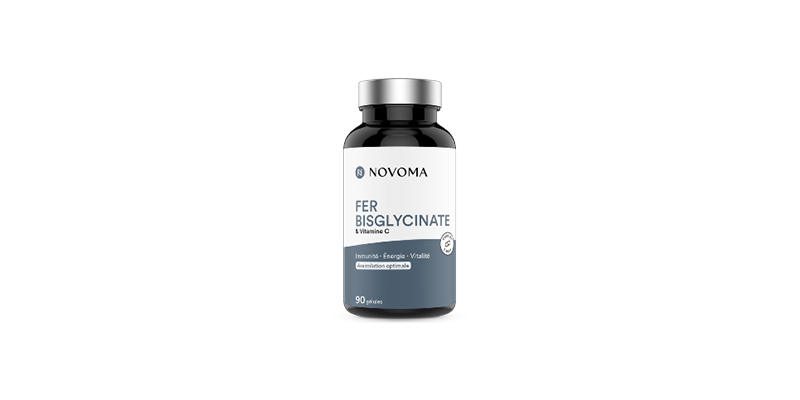
Description Iron is a trace element present in trace amounts in the body (between 3 and 5g is found in the body), but nevertheless vital. It is a component of haemoglobin (found in red blood cells), which is responsible for transporting oxygen to all cells in the body. It is also a component of myoglobin (found in muscles), which stores oxygen until it is used. It plays an important role in the proper functioning of the nervous system, and therefore helps maintain intellectual capacity and fight fatigue. Iron contributes to: √ The normal function of the immune defences, √ Reducing fatigue by ensuring the transport of oxygen in the body, √ Addressing iron deficiencies in women with heavy periods, or in people who have experienced blood loss, √ Ensuring good oxygenation in athletes.
<style>.sc-desc{color:#3F524A;font-size:16px;line-height:1.65}.sc-desc__lead{max-width:72ch}.sc-desc__lead p{margin:0 0 14px}.sc-desc__lead p:first-child{font-size:18px;color:#14342B}.sc-desc__card{background:#fff;border:1px solid #E6EAE6;border-radius:14px;padding:22px 24px;margin-top:22px;box-shadow:0 1px 2px rgba(20,52,43,.04)}.sc-desc__card--claims{background:#F7FAF7;border-color:#DBE5DE}.sc-desc__h{margin:0 0 12px;font-size:17px;font-weight:700;color:#14342B;letter-spacing:-.01em}.sc-desc__p{margin:0 0 12px}.sc-desc__p:last-child{margin-bottom:0}.sc-desc__checks{list-style:none;margin:0;padding:0}.sc-desc__checks li{position:relative;padding:7px 0 7px 32px}.sc-desc__checks li::before{content:'';position:absolute;left:0;top:10px;width:20px;height:20px;border-radius:50%;background:#EDF2EE url("data:image/svg+xml,%3Csvg%20xmlns='http://www.w3.org/2000/svg'%20viewBox='0%200%2024%2024'%20fill='none'%20stroke='%231F6B4F'%20stroke-width='3.2'%20stroke-linecap='round'%20stroke-linejoin='round'%3E%3Cpath%20d='M5%2012.5l4.2%204L19%207'/%3E%3C/svg%3E") center/11px 11px no-repeat}.sc-desc__dots{margin:0;padding-left:20px}.sc-desc__dots li{padding:3px 0}.sc-desc__callout{display:flex;gap:14px;background:#EEF4F2;border:1px solid #D8E5E0;border-radius:12px;padding:18px 20px;margin-top:22px}.sc-desc__callout--care{background:#FBF6EC;border-color:#ECDDBE}.sc-desc__callout--care .sc-desc__h{color:#7E6418}.sc-desc__callout__icon{flex:0 0 auto;width:26px;height:26px;border-radius:50%;background:#1F6B4F;color:#fff;font-weight:700;font-size:15px;line-height:26px;text-align:center}.sc-desc__callout--care .sc-desc__callout__icon{background:#C99A2E}.sc-desc__callout .sc-desc__h{margin-bottom:8px}</style><div class="sc-desc"><section class="sc-desc__card"><h3 class="sc-desc__h">Description</h3><p class="sc-desc__p">Iron is a trace element present in trace amounts in the body (between 3 and 5g is found in the body), but nevertheless vital. It is a component of haemoglobin (found in red blood cells), which is responsible for transporting oxygen to all cells in the body.</p><p class="sc-desc__p">It is also a component of myoglobin (found in muscles), which stores oxygen until it is used. It plays an important role in the proper functioning of the nervous system, and therefore helps maintain intellectual capacity and fight fatigue.</p></section><section class="sc-desc__card"><h3 class="sc-desc__h">Iron contributes to:</h3><ul class="sc-desc__dots"><li>The normal function of the immune defences,</li><li>Reducing fatigue by ensuring the transport of oxygen in the body,</li><li>Addressing iron deficiencies in women with heavy periods, or in people who have experienced blood loss,</li><li>Ensuring good oxygenation in athletes.</li></ul></section></div>