Description
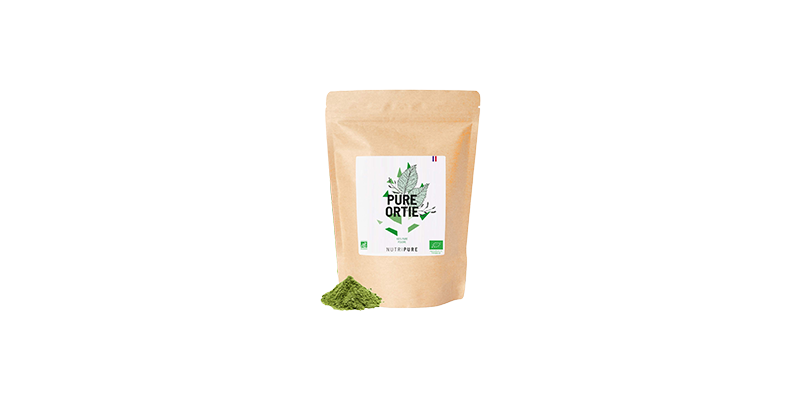
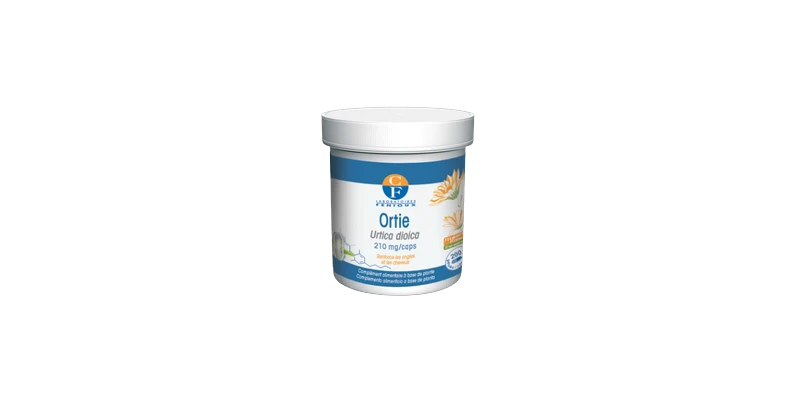
A wild plant overflowing with benefits Often wrongly considered a weed, stinging nettle or common nettle is a plant with recognised properties that has featured in various traditional pharmacopoeias for centuries. Ancestral practices used it as an expectorant, diuretic, antihypertensive, anti-anaemic, haemostatic, antiseptic, anti-inflammatory to relieve rheumatism. √ It supports venous circulation and therefore circulatory wellbeing. √ Nettle leaf powder helps you feel more energetic and improves the body's vitality. √ Lastly, nettle helps achieve clear skin. √ The minerals and trace elements contained in nettle strengthen bones, nails and hair Chemical constituents of nettle Nettle's secondary metabolites have marked pharmacological properties. Nettle leaf notably contains: √ Organic acids involved in oxidative stress, the composition of which varies according to geographical origin. √ Flavonoids which act on damage linked to oxidative stress. √ Minerals and trace elements: calcium, potassium, magnesium, phosphorus, iron, sulphur, zinc, manganese, copper, selenium… which give it valuable properties. √ Vitamins: vitamin A, vitamin B, vitamin C, vitamin D, vitamin E, vitamin K. √ Inflammation neuromediators such as histamine, acetylcholine, serotonin √ Others: tannins, chlorophyll, carotenoids, essential oils...
<style>.sc-desc{color:#3F524A;font-size:16px;line-height:1.65}.sc-desc__lead{max-width:72ch}.sc-desc__lead p{margin:0 0 14px}.sc-desc__lead p:first-child{font-size:18px;color:#14342B}.sc-desc__card{background:#fff;border:1px solid #E6EAE6;border-radius:14px;padding:22px 24px;margin-top:22px;box-shadow:0 1px 2px rgba(20,52,43,.04)}.sc-desc__card--claims{background:#F7FAF7;border-color:#DBE5DE}.sc-desc__h{margin:0 0 12px;font-size:17px;font-weight:700;color:#14342B;letter-spacing:-.01em}.sc-desc__p{margin:0 0 12px}.sc-desc__p:last-child{margin-bottom:0}.sc-desc__checks{list-style:none;margin:0;padding:0}.sc-desc__checks li{position:relative;padding:7px 0 7px 32px}.sc-desc__checks li::before{content:'';position:absolute;left:0;top:10px;width:20px;height:20px;border-radius:50%;background:#EDF2EE url("data:image/svg+xml,%3Csvg%20xmlns='http://www.w3.org/2000/svg'%20viewBox='0%200%2024%2024'%20fill='none'%20stroke='%231F6B4F'%20stroke-width='3.2'%20stroke-linecap='round'%20stroke-linejoin='round'%3E%3Cpath%20d='M5%2012.5l4.2%204L19%207'/%3E%3C/svg%3E") center/11px 11px no-repeat}.sc-desc__dots{margin:0;padding-left:20px}.sc-desc__dots li{padding:3px 0}.sc-desc__callout{display:flex;gap:14px;background:#EEF4F2;border:1px solid #D8E5E0;border-radius:12px;padding:18px 20px;margin-top:22px}.sc-desc__callout--care{background:#FBF6EC;border-color:#ECDDBE}.sc-desc__callout--care .sc-desc__h{color:#7E6418}.sc-desc__callout__icon{flex:0 0 auto;width:26px;height:26px;border-radius:50%;background:#1F6B4F;color:#fff;font-weight:700;font-size:15px;line-height:26px;text-align:center}.sc-desc__callout--care .sc-desc__callout__icon{background:#C99A2E}.sc-desc__callout .sc-desc__h{margin-bottom:8px}</style><div class="sc-desc"><section class="sc-desc__card"><h3 class="sc-desc__h">A wild plant overflowing with benefits</h3><p class="sc-desc__p">Often wrongly considered a weed, stinging nettle or common nettle is a plant with recognised properties that has featured in various traditional pharmacopoeias for centuries.</p><p class="sc-desc__p">Ancestral practices used it as an expectorant, diuretic, antihypertensive, anti-anaemic, haemostatic, antiseptic, anti-inflammatory to relieve rheumatism.</p><ul class="sc-desc__checks"><li>It supports venous circulation and therefore circulatory wellbeing.</li><li>Nettle leaf powder helps you feel more energetic and improves the body's vitality.</li><li>Lastly, nettle helps achieve clear skin.</li><li>The minerals and trace elements contained in nettle strengthen bones, nails and hair</li></ul><p class="sc-desc__p">Chemical constituents of nettle</p><p class="sc-desc__p">Nettle's secondary metabolites have marked pharmacological properties.</p><p class="sc-desc__p">Nettle leaf notably contains :</p><ul class="sc-desc__checks"><li>Organic acids involved in oxidative stress, the composition of which varies according to geographical origin.</li><li>Flavonoids which act on damage linked to oxidative stress.</li><li>Minerals and trace elements : calcium, potassium, magnesium, phosphorus, iron, sulphur, zinc, manganese, copper, selenium… which give it valuable properties.</li><li>Vitamins : vitamin A, vitamin B, vitamin C, vitamin D, vitamin E, vitamin K.</li><li>Inflammation neuromediators such as histamine, acetylcholine, serotonin</li><li>Others : tannins, chlorophyll, carotenoids, essential oils...</li></ul></section></div>