Description
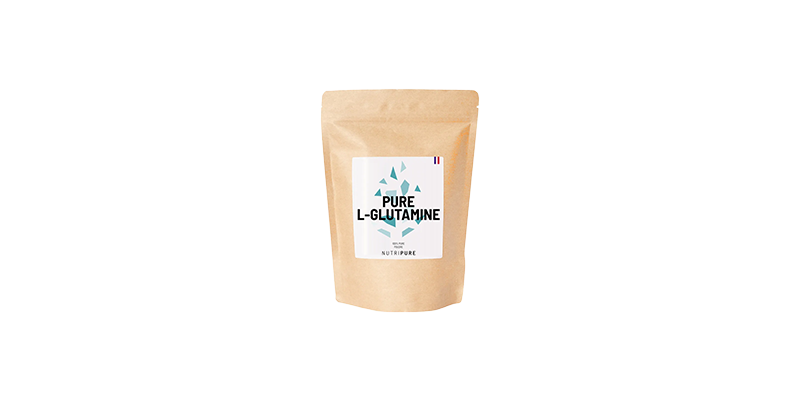
About L-Glutamine La L-glutamine is an amino acid, a basic building block of proteins, naturally synthesised by the body. It plays a major role for gut health, muscle tissue and the immune system. In certain conditions — intense stress, prolonged physical exertion or fasting — endogenous production is no longer sufficient to cover needs, making supplementation relevant. Unique properties √ Main energy substrate of enterocytes (cells of the intestinal wall), muscle cells and immune cells √ Enterocytes consume 5 times more glutamine than glucose for their energy needs, mainly derived from dietary intake √ In the event of fasting, even short, enterocytes rapidly encounter a glutamine deficit √ In the event of intense physical exertion, glutamine is consumed by muscle cells and by the kidneys to prevent acidosis linked to lactic acid production √ L form used, corresponding to the natural form of the amino acid produced by the body Authorised claims √ Protein contributes to the growth of muscle mass
<style>.sc-desc{color:#3F524A;font-size:16px;line-height:1.65}.sc-desc__lead{max-width:72ch}.sc-desc__lead p{margin:0 0 14px}.sc-desc__lead p:first-child{font-size:18px;color:#14342B}.sc-desc__card{background:#fff;border:1px solid #E6EAE6;border-radius:14px;padding:22px 24px;margin-top:22px;box-shadow:0 1px 2px rgba(20,52,43,.04)}.sc-desc__card--claims{background:#F7FAF7;border-color:#DBE5DE}.sc-desc__h{margin:0 0 12px;font-size:17px;font-weight:700;color:#14342B;letter-spacing:-.01em}.sc-desc__p{margin:0 0 12px}.sc-desc__p:last-child{margin-bottom:0}.sc-desc__checks{list-style:none;margin:0;padding:0}.sc-desc__checks li{position:relative;padding:7px 0 7px 32px}.sc-desc__checks li::before{content:'';position:absolute;left:0;top:10px;width:20px;height:20px;border-radius:50%;background:#EDF2EE url("data:image/svg+xml,%3Csvg%20xmlns='http://www.w3.org/2000/svg'%20viewBox='0%200%2024%2024'%20fill='none'%20stroke='%231F6B4F'%20stroke-width='3.2'%20stroke-linecap='round'%20stroke-linejoin='round'%3E%3Cpath%20d='M5%2012.5l4.2%204L19%207'/%3E%3C/svg%3E") center/11px 11px no-repeat}.sc-desc__dots{margin:0;padding-left:20px}.sc-desc__dots li{padding:3px 0}.sc-desc__callout{display:flex;gap:14px;background:#EEF4F2;border:1px solid #D8E5E0;border-radius:12px;padding:18px 20px;margin-top:22px}.sc-desc__callout--care{background:#FBF6EC;border-color:#ECDDBE}.sc-desc__callout--care .sc-desc__h{color:#7E6418}.sc-desc__callout__icon{flex:0 0 auto;width:26px;height:26px;border-radius:50%;background:#1F6B4F;color:#fff;font-weight:700;font-size:15px;line-height:26px;text-align:center}.sc-desc__callout--care .sc-desc__callout__icon{background:#C99A2E}.sc-desc__callout .sc-desc__h{margin-bottom:8px}</style><div class="sc-desc"><div class="sc-desc__lead"><p>La L-glutamine is an amino acid, a basic building block of proteins, naturally synthesised by the body. It plays a major role for gut health, muscle tissue and the immune system. In certain conditions, intense stress, prolonged physical exertion or fasting, endogenous production is no longer sufficient to cover needs, making supplementation relevant.</p></div><section class="sc-desc__card"><h3 class="sc-desc__h">Unique properties</h3><ul class="sc-desc__checks"><li>Main energy substrate of enterocytes (cells of the intestinal wall), muscle cells and immune cells</li><li>Enterocytes consume 5 times more glutamine than glucose for their energy needs, mainly derived from dietary intake</li><li>In the event of fasting, even short, enterocytes rapidly encounter a glutamine deficit</li><li>In the event of intense physical exertion, glutamine is consumed by muscle cells and by the kidneys to prevent acidosis linked to lactic acid production</li><li>L form used, corresponding to the natural form of the amino acid produced by the body</li></ul></section><section class="sc-desc__card sc-desc__card--claims"><h3 class="sc-desc__h">Authorised claims</h3><ul class="sc-desc__checks"><li>Protein contributes to the growth of muscle mass</li></ul></section></div>