Description
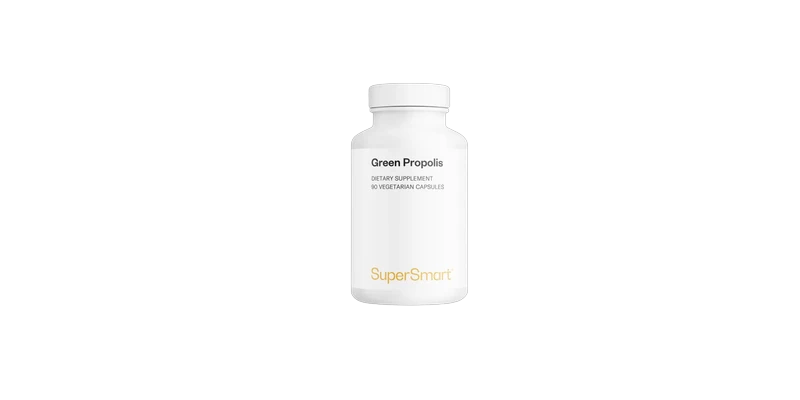
Green Propolis √ Capsules of green propolis from Brazil, a powerful health secret of the hive made by bees to protect themselves against infection from fungi, bacteria and viruses. √ Extract standardised for phenolic acids and artepillin C , a guarantee of genuine, effective green propolis (unlike most green propolis on the market, which are powders not standardised for active compounds). √ A natural substance of incredible biological richness , with more than 300 components of high value: phenolic acids, vitamins, minerals, flavonoids, essential oils, etc. √ Artepillin C is a phenolic acid with unrivalled properties, particularly present in green propolis and notably studied by researchers in immunology . √ A type of propolis unique to Brazil , made by bees from the resin of the shrub Baccharis dracunculifolia , which gives it its green colour and its benefits. √ Green propolis produced in a natural environment , lush and free from pollution . Green propolis is one of nature's unsuspected treasures. It is a substance considered in traditional herbalism to be an extremely precious substance . The composition of green propolis is incredibly rich in biological elements and highly complex, just like honey. Its effects are attributed to the many polyphenols and phenolic acids it contains, such as Artepillin C , a molecule behind numerous scientific studies in recent years. Where does propolis come from? Propolis is a coating that bees use to make the inside of the hive stronger, more watertight and more resistant to microbial and fungal invasions. They make it from resins they collect from tree buds and bark (poplars and conifers for European propolis, baccharis for Brazilian green propolis), to which they add wax and saliva. Originally, these resins serve to protect the buds from pathogens thanks to their powerful antiseptic properties . The propolis is then collected by beekeepers by scraping the "frames" of the hives and is then cleared of wax and impurities. What makes green propolis more advisable? There are different types of propolis depending on the geographical area of the hive, the plants present in that area, the availability of these plants throughout the seasons, and the species of bee. But it is above all the ecosystem in which the bee gathers its resins that affects the composition of the propolis. In our regions, poplar is the main source, but it is the Brazilian varieties (and in particular the vegetative apexes of Baccharis dradunculifolia ) that contain the most therapeutic properties. There, the bees enjoy an exceptional environment, far from the ravages of intensive agriculture and its pesticides. The colour of baccharis green propolis is explained by the fact that bees preferentially collect chlorophyll from vegetative buds, and by the richness of the propolis in several specific constituents (cinnamic acid, kaempferol, Artepillin C). What does green propolis contain? On average, more than 300 different components of propolis have been counted, all of which have been identified using modern analytical methods: √ Flavonoids (which include flavones, flavonols and flavanones). These play an important role in plant pigmentation and give propolis powerful antioxidant and anti-inflammatory properties. There are more than 60 of them, such as quercetin, pinostrobin and galangin. √ Phenolic acids. The main phenols are caffeic acid (with very strong antioxidant power), cinnamic acid (an exceptional antifungal), benzoic acid, diterpenic acid and ferulic acid (anti-inflammatory). √ Aromatic substances (including vanillin and isovanillin). √ Volatile essential oils (including anethole and eugenol). √ Vitamins A and B, and minerals (including zinc and silica).