Description
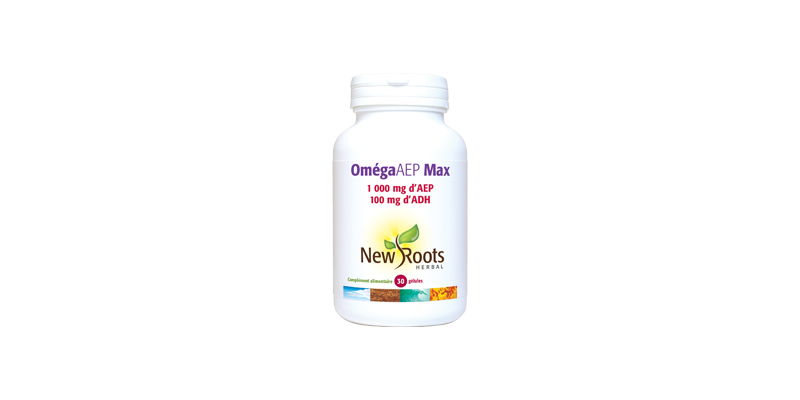
OmégaAEP Max OmégaAEP Max is an ultra-concentrated nutraceutical providing marine fatty acids with a high content of eicosapentaenoic acid ( EPA ): 1.000 mg supplemented by 100 mg of docosahexaenoic acid ( DHA ). This unique omega-3 ratio is extracted by molecular distillation ( a method of separating and purifying substances) of pharmaceutical grade from various species of small wild deep-sea fish. These species (sardines and/or anchovies) were chosen because they are less likely than larger fish species to accumulate heavy metals and other pollutants. This technology guarantees an oil of high purity containing a largely negligible or even zero amount of saturated fats, heavy metals, PCBs and other contaminants. OMEGA-3 FATTY ACIDS They form a special group of fats that the body needs just as much to function properly as vitamins or any other dietary micronutrient. Omega-3 fatty acids can only be obtained through diet, unlike many essential compounds that the body can produce, such as cholesterol or certain B vitamins. The importance of omega-3 fatty acid intake for normal growth and good general health has been recognised since the 1930s thanks to the popularity of products such as cod liver oil. It was not until the observation of the Greenland Inuit in the 1970s that the true benefits of omega-3 supplementation were discovered. The Inuit live largely on a diet rich in fats, made up of fish and cold-water mammals rich in omega-3. The significantly low incidence of heart attacks and rheumatoid arthritis among the Inuit led to extensive research into the benefits of omega-3 fatty acids. Eicosapentaenoic acid (EPA) and docosahexaenoic acid (DHA) are precursors of the series-3 prostaglandins, hence their name of omega-3 fatty acids. These prostaglandins are hormone-like substances that, by contributing to the widening of blood vessels, promote blood circulation and lower blood pressure, thereby reducing the risk of heart attack or stroke. In addition to prevention in cardiovascular health, omega-3s have also been associated with healthy foetal development and improvement of neurodegenerative diseases such as Alzheimer's disease. EPA acts as a precursor for the production of prostaglandins that control the inflammatory response behind joint diseases such as arthritis. EPA therefore helps improve the health of arterial walls and contributes to the prevention of arterial coagulation likely to cause heart attacks and strokes. EPA helps maintain the balance between prostaglandins, thromboxanes and leukotrienes. An imbalance between these humoral mediators can cause allergic reactions and inflammation. DHA plays a more structural role in the development and composition of the brain in young children, while EPA needs become more pronounced during childhood, adolescence and beyond. Several studies have shown that EPA supplementation can help improve behaviour, attention span, academic performance and general conduct.
<style>.sc-desc{color:#3F524A;font-size:16px;line-height:1.65}.sc-desc__lead{max-width:72ch}.sc-desc__lead p{margin:0 0 14px}.sc-desc__lead p:first-child{font-size:18px;color:#14342B}.sc-desc__card{background:#fff;border:1px solid #E6EAE6;border-radius:14px;padding:22px 24px;margin-top:22px;box-shadow:0 1px 2px rgba(20,52,43,.04)}.sc-desc__card--claims{background:#F7FAF7;border-color:#DBE5DE}.sc-desc__h{margin:0 0 12px;font-size:17px;font-weight:700;color:#14342B;letter-spacing:-.01em}.sc-desc__p{margin:0 0 12px}.sc-desc__p:last-child{margin-bottom:0}.sc-desc__checks{list-style:none;margin:0;padding:0}.sc-desc__checks li{position:relative;padding:7px 0 7px 32px}.sc-desc__checks li::before{content:'';position:absolute;left:0;top:10px;width:20px;height:20px;border-radius:50%;background:#EDF2EE url("data:image/svg+xml,%3Csvg%20xmlns='http://www.w3.org/2000/svg'%20viewBox='0%200%2024%2024'%20fill='none'%20stroke='%231F6B4F'%20stroke-width='3.2'%20stroke-linecap='round'%20stroke-linejoin='round'%3E%3Cpath%20d='M5%2012.5l4.2%204L19%207'/%3E%3C/svg%3E") center/11px 11px no-repeat}.sc-desc__dots{margin:0;padding-left:20px}.sc-desc__dots li{padding:3px 0}.sc-desc__callout{display:flex;gap:14px;background:#EEF4F2;border:1px solid #D8E5E0;border-radius:12px;padding:18px 20px;margin-top:22px}.sc-desc__callout--care{background:#FBF6EC;border-color:#ECDDBE}.sc-desc__callout--care .sc-desc__h{color:#7E6418}.sc-desc__callout__icon{flex:0 0 auto;width:26px;height:26px;border-radius:50%;background:#1F6B4F;color:#fff;font-weight:700;font-size:15px;line-height:26px;text-align:center}.sc-desc__callout--care .sc-desc__callout__icon{background:#C99A2E}.sc-desc__callout .sc-desc__h{margin-bottom:8px}</style><div class="sc-desc"><section class="sc-desc__card"><h3 class="sc-desc__h">OmégaAEP Max</h3><p class="sc-desc__p">OmégaAEP Max is an ultra-concentrated nutraceutical providing marine fatty acids with a high content of eicosapentaenoic acid ( EPA): 1.000 mg supplemented by 100 mg of docosahexaenoic acid ( DHA). This unique omega-3 ratio is extracted by molecular distillation ( a method of separating and purifying substances) of pharmaceutical grade from various species of small wild deep-sea fish. These species (sardines and/or anchovies) were chosen because they are less likely than larger fish species to accumulate heavy metals and other pollutants. This technology guarantees an oil of high purity containing a largely negligible or even zero amount of saturated fats, heavy metals, PCBs and other contaminants.</p></section><section class="sc-desc__card"><h3 class="sc-desc__h">OMEGA-3 FATTY ACIDS</h3><p class="sc-desc__p">They form a special group of fats that the body needs just as much to function properly as vitamins or any other dietary micronutrient. Omega-3 fatty acids can only be obtained through diet, unlike many essential compounds that the body can produce, such as cholesterol or certain B vitamins. The importance of omega-3 fatty acid intake for normal growth and good general health has been recognised since the 1930s thanks to the popularity of products such as cod liver oil. It was not until the observation of the Greenland Inuit in the 1970s that the true benefits of omega-3 supplementation were discovered. The Inuit live largely on a diet rich in fats, made up of fish and cold-water mammals rich in omega-3. The significantly low incidence of heart attacks and rheumatoid arthritis among the Inuit led to extensive research into the benefits of omega-3 fatty acids.</p><p class="sc-desc__p">Eicosapentaenoic acid (EPA) and docosahexaenoic acid (DHA) are precursors of the series-3 prostaglandins, hence their name of omega-3 fatty acids. These prostaglandins are hormone-like substances that, by contributing to the widening of blood vessels, promote blood circulation and lower blood pressure, thereby reducing the risk of heart attack or stroke.</p><p class="sc-desc__p">In addition to prevention in cardiovascular health, omega-3s have also been associated with healthy foetal development and improvement of neurodegenerative diseases such as Alzheimer's disease.</p><p class="sc-desc__p">EPA acts as a precursor for the production of prostaglandins that control the inflammatory response behind joint diseases such as arthritis. EPA therefore helps improve the health of arterial walls and contributes to the prevention of arterial coagulation likely to cause heart attacks and strokes.</p><p class="sc-desc__p">EPA helps maintain the balance between prostaglandins, thromboxanes and leukotrienes. An imbalance between these humoral mediators can cause allergic reactions and inflammation.</p><p class="sc-desc__p">DHA plays a more structural role in the development and composition of the brain in young children, while EPA needs become more pronounced during childhood, adolescence and beyond. Several studies have shown that EPA supplementation can help improve behaviour, attention span, academic performance and general conduct.</p></section></div>