Description
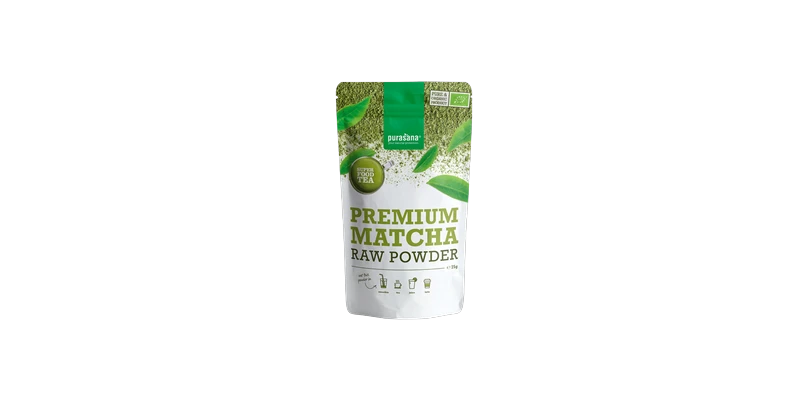
Premium Matcha Powder √ 100% organic matcha powder from Japan √ Natural source of energy √ Supports the immune system √ 30 mg of caffeine per serving Description Matcha is a Japanese green tea made from the finest tea leaves. Matcha is a shade-grown tea, meaning that 2 weeks before harvest, the tea bushes are shaded with mats or screens. The bushes respond by producing more chlorophyll . Chlorophyll gives matcha its vivid green colour and its detoxifying properties . The power of 10 cups of green tea Matcha powder is 100 times richer in antioxidants than ordinary green tea, which translates into an ORAC value of 2400 H-ORAC units. In addition, matcha is a source of vitamin C, E, potassium, calcium, iron and zinc . What makes a good matcha powder? A higher-quality matcha is very fine and has a silky texture . A lower-quality matcha has a coarse texture and feels grainy between the fingers. A good matcha also has a mild, savoury flavour . Why not take matcha on an empty stomach? Matcha is a drink rich in caffeine (30 mg/1 g) and contributes to an increased feeling of energy and alertness . Too much caffeine on an empty stomach can cause nausea. Drinking matcha during or after a meal helps with the digestion of that meal. How to prepare the premium tea? Add 3 g of matcha powder to 200 ml of soya or rice milk for a shake, or 1 g to 70-100 ml of near-hot water for an invigorating tea. Add an extra touch to your smoothies, juices or lattes with a spoonful of Classic Matcha! Quality Purasana Premium Matcha powder contains 100% raw Matcha , with no additional additives. The product is certified organic, vegan and kosher , and is also free from allergens such as gluten, lactose and soya. Each batch of this product is tested to verify the absence of heavy metals, pesticides and harmful micro-organisms. Purasana and its suppliers meticulously ensure that only the purest, highest-quality products are sold, under the approving eye of the Belgian Food Agency and in accordance with IFS standards. You can also recognise the quality of Purasana products through the organic and vegan labels affixed to the packaging. The health claims we make about this product have been scientifically proven and evaluated by the European Union (EFSA, European Food Safety Authority). What is the difference between matcha and traditional green tea? With traditional green tea, you make an infusion. The green tea leaves are infused for a few minutes, then discarded, and the infusion is drunk; consequently, many nutrients are lost. With matcha, the tea is ground into powder, to which you add hot water. The tea is mixed with the water and all the active compounds of the tea leaf are consumed. By consuming the whole tea leaf, and not just an infusion, you ingest far more nutrients, as they are not discarded. You also consume more caffeine than in a cup of "classic" green tea. √ Colour: A vivid emerald green indicates a premium matcha. Yellowish or brownish shades signal a lower quality. √ Texture: Fine, silky powder, stone-ground for optimal results. √ Flavour & aroma: Fresh, subtle nutty aroma, with a mild, umami flavour, without bitterness. √ Raw materials: Made exclusively from shade-grown Tencha leaves, rich in nutrients. √ Processing: Traditional Japanese methods guarantee a pure, high-quality matcha. Energy per 100g: 1397 kJ / 334 kcal