Description
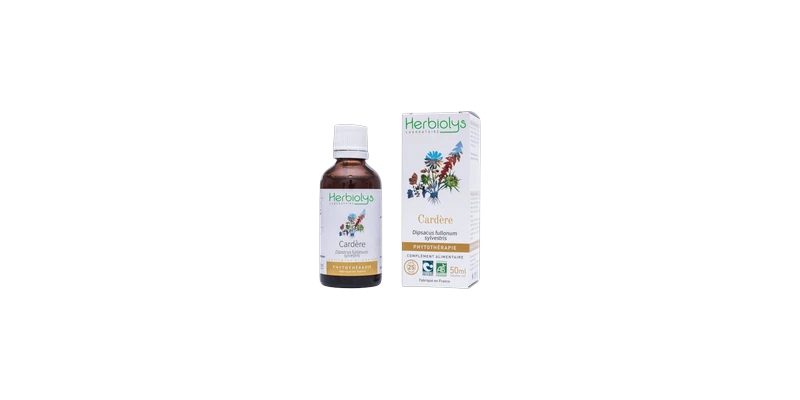
Medicinal plant known for its depurative action. Recommended for the elimination of neurotoxins caused by tick-borne bacteria (Lyme disease). History and traditional uses of Teasel Wild teasel belongs to the Dipsacaceae family. This family name comes from the Greek terms “dípsa”, meaning thirst, and “akeo”, meaning to cure. Literally, teasel “cures thirst”. This refers to the opposite leaves on the stem that form a cup that can fill with rainwater: the famous “bird bath”. Historically, it was used for carding and combing wool textile fibres. This was possible because of the curve of its spines, which earned it another name: “wolf comb”. Teasel root, a diuretic and depurative, was used to treat skin conditions such as eczema, impetigo and psoriasis. It is credited with an ability to soothe stomach aches and improve the functioning of the digestive system, particularly in case of diarrhoea. It is said to stimulate the appetite and tone the liver, particularly in case of jaundice and gallbladder disorders. A more contemporary use points to its potential in the treatment of Lyme disease. This application remains subject to further research. Technical characteristics √ Organic, fresh plant extract (not frozen) √ Macerated on site at the place of harvest (Origin France) √ 50 ml glass bottle