Description
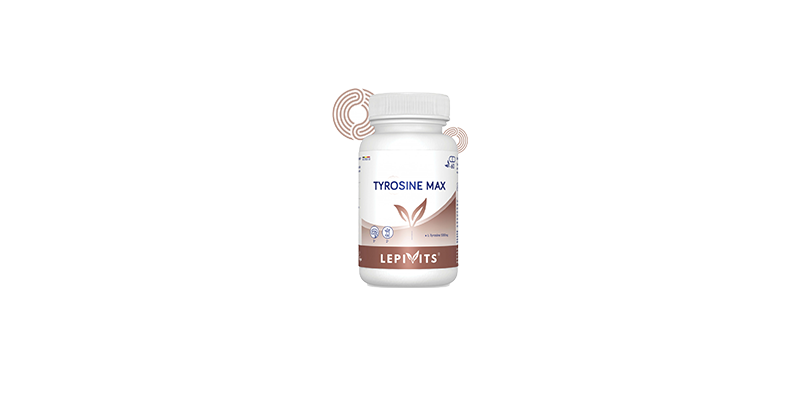
A b oost for cognitive performance Tyrosine promotes the production of catecholamines that help optimise cognitive performance. Provides the body with: √ L-tyrosine Tyrosine taken on an empty stomach crosses the blood-brain barrier for conversion in the brain. A fraction of it is then converted into L-DOPA through the action of an enzyme called tyrosine hydroxylase (4), a catalyst for the conversion into dopamine. Studies show that these conversions are increased in situations of stress or intense cognitive exercise. In the medium term, stress is known to reduce catecholamine levels, thereby diminishing cognitive performance, probably due to the depletion of amino acids essential to their synthesis (dopamine - noradrenaline). A tyrosine deficiency can lead to apathy, difficulties with concentration, memory and alertness, and in severe cases to burn-out and hyperactivity. This deficiency can potentially cause restless legs syndrome, which is more pronounced at night (tingling, pins and needles, a need to move). During mood disturbances caused by premenstrual syndrome (PMS), the amount of free L-tyrosine decreases significantly, causing stress as well as a depressive state. A lack of serotonin heightens this phenomenon. Finally, L-tyrosine is the direct precursor of thyroid hormones, producing thyroxine (T4) in the presence of iodine and B-group vitamins. We recommend combining tyrosine with a course of Multi-Men/Fem to regulate the functioning of the thyroid gland.