Description
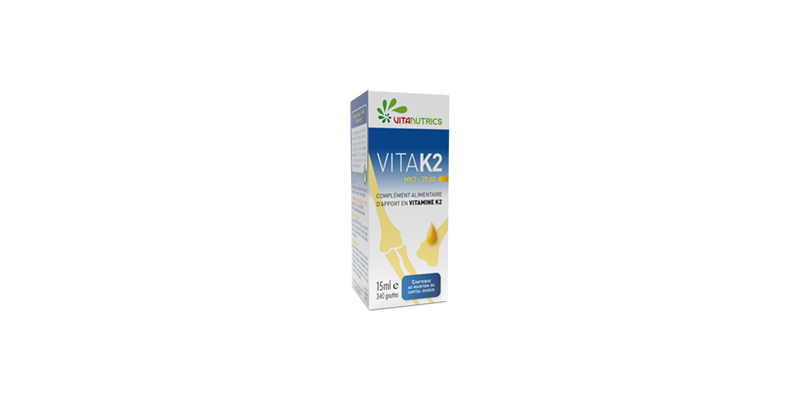
BONE STRENGTHENING AND CARDIOVASCULAR BALANCE VITAMIN K, A STILL LITTLE-KNOWN VITAMIN Vitamin K was discovered in 1929, and its roles in coagulation were rapidly identified. In reality, behind this generic term lies a group of fat-soluble compounds called “naphthoquinones”. Several forms have been identified, the best known of which are: √ vitamin K1 (or phylloquinone) of plant origin is found mainly in leafy vegetables (lettuce, spinach, chard...) and plant oils. √ vitamin K2 (or menaquinone) comes from bacterial fermentation. This is why it is found in natto (a Japanese food made from fermented soya) or certain cheeses. Vitamin K2 is also synthesised by certain bacteria in the gut microbiome. More recently, new roles have been attributed to it in bone health, cardiovascular protection, and even in helping prevent the development of cancer. THE ADVANTAGES OF NATTO-DERIVED VITAMIN K2 While all forms of vitamin K share a common core, they differ in their side chain. However, not all forms of vitamin K have the same bioavailability: in spinach, for example, absorption is 4 to 17% whereas it is more than 80% with a solubilised vitamin K2 in a lipid matrix such as butter or oil. In addition, vitamin K exists in two forms: trans- and cis-. The latter (cis-) has limited absorption. It is therefore essential to favour the trans- form for better bioavailability. For these various reasons, Vitanutrics chose a Vitamin K made by biofermentation from natto, this food fermented by Bacillus subtilis natto . This vitamin K2 is 100% natural, ultra-pure, with no solvent or preservative and in trans- form only. In addition, it has been blended with organically farmed rapeseed oil to allow optimal absorption. THE ROLES OF VITAMIN K2 Vitamin K is the cofactor of enzymes responsible for carboxylation reactions. These carboxylases are mainly involved in bone metabolism, coagulation and amino acid metabolism. √ Bone health and osteocalcin Osteocalcin is a protein hormone specific to bone tissue. Present in bone and dentine, it is secreted by osteoblasts (which make up bones and teeth) and promotes the fixation of calcium to the bone matrix. Vitamin K2 carboxylates the glutamic acid of the hormone in order to make it active and functional. Moreover, several clinical studies have shown that an intake of vitamin K2 can reduce the risk of hip fractures and increase bone density. √ Reduction of arterial calcification and cardiovascular prevention While vitamin K1 is not linked to cardiovascular protection, this is the case for vitamin K2. Several studies have shown that vitamin K2 intake reduces cardiovascular risk as well as arterial calcification . Taking vitamin D and vitamin K together for 3 years also strongly improves the elasticity of the carotid and coronary arteries , according to a study carried out in menopausal women. It could therefore play an interesting role in people with arterial hypertension. √ Cancer Regarding cancer prevention, the data are less extensive than for the bone and cardiovascular systems. Nevertheless, numerous epidemiological studies show that an adequate level of Vitamin K2 is associated with a reduction in risk (-27 to -46%) of developing certain cancers: colorectal, breast, prostate, liver and lung.