Description
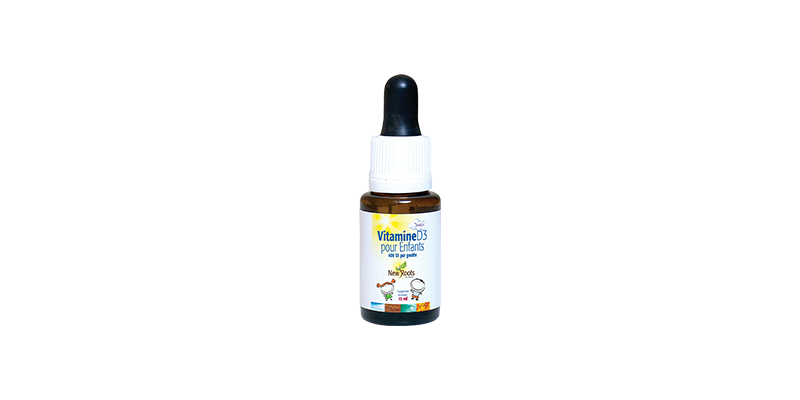
Vitamin D3 for Children Vitamin D3 for Children provides the biologically active form of vitamin D (cholecalciferol). Vitamin D supports the proper absorption and use of calcium and phosphorus. It maintains a stable blood calcium level. It contributes to bone and dental health, to muscle activity, and to the normal functioning of the immune system. Vitamin D is necessary for the growth and normal development of children's bone systems. A sufficient level of vitamin D3 is crucial during childhood and adolescence, as a deficiency affects, among other things, the immune response and mood. Sun exposure Since the body's epidermis can synthesise its own vitamin D after sun exposure, it is also called "the sunshine vitamin". An exposure of 10 to 15 minutes per day is normally enough for the body to produce a sufficient amount of vitamin D. But many people, even in a sunny climate, do not produce enough and need to obtain it either through diet or in the form of nutritional supplements. The lack of sunlight during the winter months and the use of sunscreen in summer mean that, in many cases, vitamin D supplementation should be recommended throughout the year. The increasing use of sunscreens is partly responsible for insufficient vitamin D production by the skin. A sunscreen with a sun protection factor (SPF) of 15 reduces vitamin D synthesis by the skin by around 99 %. People with darker skin need more sun exposure to produce the same amount of vitamin D as those with lighter skin. A link has also been established between obesity and vitamin D deficiency, probably due to lower bioavailability. Metabolism Vitamin D2 is converted in the liver into 25-hydroxyvitamin D2 (abbreviated to 25[OH]D2), the most important circulating metabolite of vitamin D. This is then converted by the kidneys into its active form, 1,25-dihydroxy vitamin D (1,25[OH]2 D). By regulating calcium metabolism, 1,25[OH]2 D plays a central role in muscle and bone health. A vitamin D deficiency reduces calcium absorption in the intestine by more than 50 %. A lower serum calcium concentration stimulates the secretion of parathyroid hormone (PTH) to correct hypocalcaemia as quickly as possible by drawing on bone calcium. Deficiency Hypovitaminosis D (vitamin D deficiency) is therefore common. Vitamin D deficiency affects around 50 % of adults, adolescents and children who nevertheless appear to be in perfect health. Various epidemiological studies have also confirmed that a low vitamin D level was associated with a higher risk of chronic diseases such as diabetes, cardiovascular disease, breast and prostate cancers and colorectal cancer, certain autoimmune diseases, as well as childhood rickets. Immunity Vitamin D has been shown to play a role in the immune system in that it modulates the acquired immune response and enhances the innate immune response. This makes it a key element in the fight against infections. Vitamin D triggers the differentiation of monocytes into macrophages, stimulates phagocytosis, increases the production of lysosomal enzymes and interleukin 10 (IL-10), and reduces that of interleukin 2 (IL-2). The notable influence of vitamin D3 on immune system performance becomes clear in a context of deficiency. Children and adolescents lacking this essential vitamin are more exposed to illness and infection. Supplementation of children with vitamin D3 has shown, in clinical trials, promising results for several conditions ranging from respiratory infections, or even pneumonia, to irritable bowel syndrome (IBS). The University of California, San Francisco conducted studies on the effects of liquid vitamin D3 on the main symptoms of autism. There is in fact a link between a low blood level of vitamin D and the insufficient production of serotonin associated with the symptoms of autism. With a concentration of 400 IU (international units) per drop, the dosage of our product can easily be adapted to individual needs. The product is simple and convenient to administer. Its neutral taste means it can be taken neat, or easily mixed into cold drinks, cereals, fruit or yoghurt.
<style>.sc-desc{color:#3F524A;font-size:16px;line-height:1.65}.sc-desc__lead{max-width:72ch}.sc-desc__lead p{margin:0 0 14px}.sc-desc__lead p:first-child{font-size:18px;color:#14342B}.sc-desc__card{background:#fff;border:1px solid #E6EAE6;border-radius:14px;padding:22px 24px;margin-top:22px;box-shadow:0 1px 2px rgba(20,52,43,.04)}.sc-desc__card--claims{background:#F7FAF7;border-color:#DBE5DE}.sc-desc__h{margin:0 0 12px;font-size:17px;font-weight:700;color:#14342B;letter-spacing:-.01em}.sc-desc__p{margin:0 0 12px}.sc-desc__p:last-child{margin-bottom:0}.sc-desc__checks{list-style:none;margin:0;padding:0}.sc-desc__checks li{position:relative;padding:7px 0 7px 32px}.sc-desc__checks li::before{content:'';position:absolute;left:0;top:10px;width:20px;height:20px;border-radius:50%;background:#EDF2EE url("data:image/svg+xml,%3Csvg%20xmlns='http://www.w3.org/2000/svg'%20viewBox='0%200%2024%2024'%20fill='none'%20stroke='%231F6B4F'%20stroke-width='3.2'%20stroke-linecap='round'%20stroke-linejoin='round'%3E%3Cpath%20d='M5%2012.5l4.2%204L19%207'/%3E%3C/svg%3E") center/11px 11px no-repeat}.sc-desc__dots{margin:0;padding-left:20px}.sc-desc__dots li{padding:3px 0}.sc-desc__callout{display:flex;gap:14px;background:#EEF4F2;border:1px solid #D8E5E0;border-radius:12px;padding:18px 20px;margin-top:22px}.sc-desc__callout--care{background:#FBF6EC;border-color:#ECDDBE}.sc-desc__callout--care .sc-desc__h{color:#7E6418}.sc-desc__callout__icon{flex:0 0 auto;width:26px;height:26px;border-radius:50%;background:#1F6B4F;color:#fff;font-weight:700;font-size:15px;line-height:26px;text-align:center}.sc-desc__callout--care .sc-desc__callout__icon{background:#C99A2E}.sc-desc__callout .sc-desc__h{margin-bottom:8px}</style><div class="sc-desc"><section class="sc-desc__card"><h3 class="sc-desc__h">Vitamin D3 for Children</h3><p class="sc-desc__p">Vitamin D3 for Children provides the biologically active form of vitamin D (cholecalciferol). Vitamin D supports the proper absorption and use of calcium and phosphorus. It maintains a stable blood calcium level. It contributes to bone and dental health, to muscle activity, and to the normal functioning of the immune system. Vitamin D is necessary for the growth and normal development of children's bone systems.</p><p class="sc-desc__p">A sufficient level of vitamin D3 is crucial during childhood and adolescence, as a deficiency affects, among other things, the immune response and mood.</p></section><section class="sc-desc__card"><h3 class="sc-desc__h">Sun exposure</h3><p class="sc-desc__p">Since the body's epidermis can synthesise its own vitamin D after sun exposure, it is also called "the sunshine vitamin". An exposure of 10 to 15 minutes per day is normally enough for the body to produce a sufficient amount of vitamin D. But many people, even in a sunny climate, do not produce enough and need to obtain it either through diet or in the form of nutritional supplements. The lack of sunlight during the winter months and the use of sunscreen in summer mean that, in many cases, vitamin D supplementation should be recommended throughout the year. The increasing use of sunscreens is partly responsible for insufficient vitamin D production by the skin. A sunscreen with a sun protection factor (SPF) of 15 reduces vitamin D synthesis by the skin by around 99 %.</p><p class="sc-desc__p">People with darker skin need more sun exposure to produce the same amount of vitamin D as those with lighter skin. A link has also been established between obesity and vitamin D deficiency, probably due to lower bioavailability.</p></section><section class="sc-desc__card"><h3 class="sc-desc__h">Metabolism</h3><p class="sc-desc__p">Vitamin D2 is converted in the liver into 25-hydroxyvitamin D2 (abbreviated to 25[OH]D2), the most important circulating metabolite of vitamin D. This is then converted by the kidneys into its active form, 1,25-dihydroxy vitamin D (1,25[OH]2 D). By regulating calcium metabolism, 1,25[OH]2 D plays a central role in muscle and bone health. A vitamin D deficiency reduces calcium absorption in the intestine by more than 50 %. A lower serum calcium concentration stimulates the secretion of parathyroid hormone (PTH) to correct hypocalcaemia as quickly as possible by drawing on bone calcium.</p></section><section class="sc-desc__card"><h3 class="sc-desc__h">Deficiency</h3><p class="sc-desc__p">Hypovitaminosis D (vitamin D deficiency) is therefore common. Vitamin D deficiency affects around 50 % of adults, adolescents and children who nevertheless appear to be in perfect health. Various epidemiological studies have also confirmed that a low vitamin D level was associated with a higher risk of chronic diseases such as diabetes, cardiovascular disease, breast and prostate cancers and colorectal cancer, certain autoimmune diseases, as well as childhood rickets.</p></section><section class="sc-desc__card"><h3 class="sc-desc__h">Immunity</h3><p class="sc-desc__p">Vitamin D has been shown to play a role in the immune system in that it modulates the acquired immune response and enhances the innate immune response. This makes it a key element in the fight against infections. Vitamin D triggers the differentiation of monocytes into macrophages, stimulates phagocytosis, increases the production of lysosomal enzymes and interleukin 10 (IL-10), and reduces that of interleukin 2 (IL-2). The notable influence of vitamin D3 on immune system performance becomes clear in a context of deficiency. Children and adolescents lacking this essential vitamin are more exposed to illness and infection.</p><p class="sc-desc__p">Supplementation of children with vitamin D3 has shown, in clinical trials, promising results for several conditions ranging from respiratory infections, or even pneumonia, to irritable bowel syndrome (IBS). The University of California, San Francisco conducted studies on the effects of liquid vitamin D3 on the main symptoms of autism. There is in fact a link between a low blood level of vitamin D and the insufficient production of serotonin associated with the symptoms of autism.</p><p class="sc-desc__p">With a concentration of 400 IU (international units) per drop, the dosage of our product can easily be adapted to individual needs. The product is simple and convenient to administer. Its neutral taste means it can be taken neat, or easily mixed into cold drinks, cereals, fruit or yoghurt.</p></section></div>