
AI around the consultation, not in it
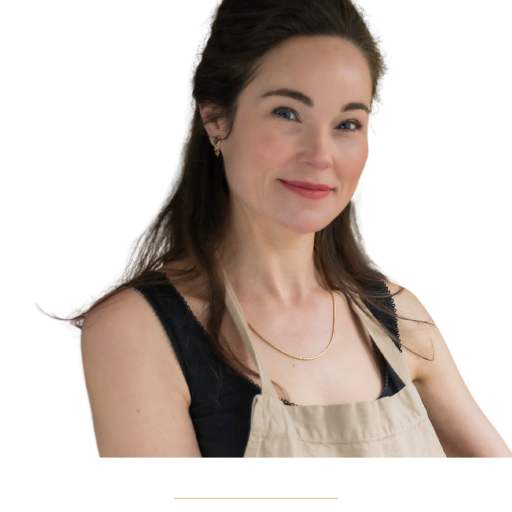
In many practices, time does not go into the session itself. It goes into what Clara Materne calls after-sales service: the before and after of the appointment. Writing reports, reading and sorting the documents received, filing records, answering emails, producing patient handouts, doing layouts, feeding a newsletter or social media.
That is where AI comes into her practice. In her view, the main benefit is not reasoning faster, but giving back listening time in consultation: "I'm not sitting there thinking I mustn't forget to take my notes". She has not shortened her consultations; she has done away with the administrative work in the evenings and at weekends.
Setting the framework before opening a tool
The practitioner's status changes the rules
According to Clara Materne, three situations coexist: the doctor, the regulated practitioner such as a physiotherapist or a dietitian, and the unregulated practitioner, which covers most naturopaths and nutritional therapists. Each has its own obligations and rights, and they do not lead to the same tools.
The questions to ask before sending anything to a tool are always the same: where does the data go, how long is it kept, is it used to train a model, and what difference does the type of subscription make. This last point is often overlooked, even though it determines the regime applied to the content sent.
Anonymise, pseudonymise, configure
The principle she follows: the less personal information, the better. No full name, no date of birth, no file number, no email address or phone number. "My 47-year-old patient with such and such a problem" does not say the same thing as a name linked to a date of birth.
Beyond anonymisation, she describes an internal pseudonymisation system: when a patient file is created, a pseudonym is generated and then reused in AI tools. The operation can itself be automated; otherwise it adds an administrative burden that cancels out the benefit.
Two settings complete the picture: turning off model improvement based on the content sent, in the data control settings, and favouring European or Swiss hosting when the context requires it.
She also points out what remains unclear today: the legal status of a report produced by AI, the boundary with medical device software, and professional liability insurance cover if an assistant makes an error. The legal framework is moving more slowly than practice.
From transcript to consultation report
The workflow
In her practice, consent is built into the terms and conditions of sale that the patient accepts when booking: they agree to be recorded so that a consultation report can be generated.
The session is captured by a dedicated recorder, able to handle long conversations and tell voices apart. She does not use the report generated by the device: she retrieves the full transcript and runs it through a dedicated project, set up once and for all. The document comes out with a date at the top of the file, which is enough to sort the reports in chronological order without any intervention.
The prompt that stops AI from making things up
This is the most important point of her demonstration. Without strict instructions, the tool adds dietary recommendations that were never made, fills in a dosage that was not given, or produces bibliographic references that exist nowhere and have every appearance of being serious.
Her instructions: invent nothing, reconstruct nothing, rely only on the transcript, stay objective, do not try to please, criticise rather than agree. She also insists on memory: a model that replays old conversations mixes patients up. A final review remains mandatory.
Another useful fix: the names of molecules and brands are misspelt by default. A misspelt zinc bisglycinate is corrected by teaching the dictation tool upstream, and by directing the search towards a reference catalogue rather than the open web.
A stable report template
Her report structure does not change from one consultation to the next: clinical complaints, dietary recommendations, supplementation recommendations with references, what to continue, add or stop, the tests to plan and the appointments to arrange before the follow-up. A fixed template is what makes automation possible.
Admin running in the background
Every evening, an automation scans her inbox, retrieves the attachments and files them in the corresponding patient file. Invoices go to her accounting software. In the morning, an agent sends her an update on the day: the patients expected, the emails still unanswered, what was not done the day before.
Her email is equipped with an assistant that prioritises and drafts replies, which she dictates by voice rather than typing them. She describes the result as "a little personalised secretary".
An important safeguard: she does not give automatic access to everything. The tool asks for confirmation before carrying out a sensitive action. A lab result filed in the wrong folder is hard to find again, and the way a computer is organised remains something personal.
Patient materials, content and continuing education
Advice sheets, documents handed out in consultation and training materials are now produced without going through an outside provider. She built the forty slides of her webinar this way, going over the structure three to four times before having it formatted.
For keeping up to date, she separates two uses. Searching for studies goes through an engine designed to cite its sources, which limits invented references. And for her own content, she has built an internal library: her courses, her articles, the books she considers reliable, with the instruction to answer only from this documentation, never from the web.
A detail that matters for credibility: a text visibly produced by AI discredits its author, even when the author fully stands behind its content. American punctuation and long dashes are the markers she mentions.
What it costs, in euros and in tokens
Paid subscriptions represent a monthly budget, which she compares with the ten hours of freelance work she no longer buys. She also describes a less visible constraint: tokens. The longer a conversation gets, the more each new question rereads the whole history and consumes.
Her rule: do not let long memories build up, compress or restart a conversation that has become too heavy, and upload images manually rather than having them generated. The benefit is twofold, budgetary and environmental.
Limits to keep in mind
According to Clara Materne, the main risks are not technical. Excessive standardisation comes first: the more you delegate, the less you reason. She is clearly opposed to ready-made protocols, in a profession where individualisation is the heart of the work.
Next come the illusion of accuracy of a well-worded answer, hallucinations, errors on supplements and molecules, and invented references. She also rejects algorithms that automatically suggest supplementation based on a test result.
Keeping the practitioner's independent judgement
The message she repeated throughout the session fits in one sentence: the tool lightens repetitive tasks, it does not decide in the therapist's place. Neither judgement, nor individualisation, nor responsibility can be delegated.
In fact, she uses AI as a challenger more than as an assistant: once her report is written, she asks what she might have missed. Sometimes the answer opens up a lead, sometimes it is of no interest. Either way, she is the one who decides.
Search on objective criteria, decide for yourself
This is the same logic as Simplycure's: a catalogue of more than 4,500 products and 250 brands, searchable on objective criteria such as the presence or absence of an active ingredient, formula comparison, dosage. The tool does not suggest supplementation based on a clinical picture, and health data from patient questionnaires is hosted in Europe.
Create your free practitioner account and try criteria-based search on your next recommendation.