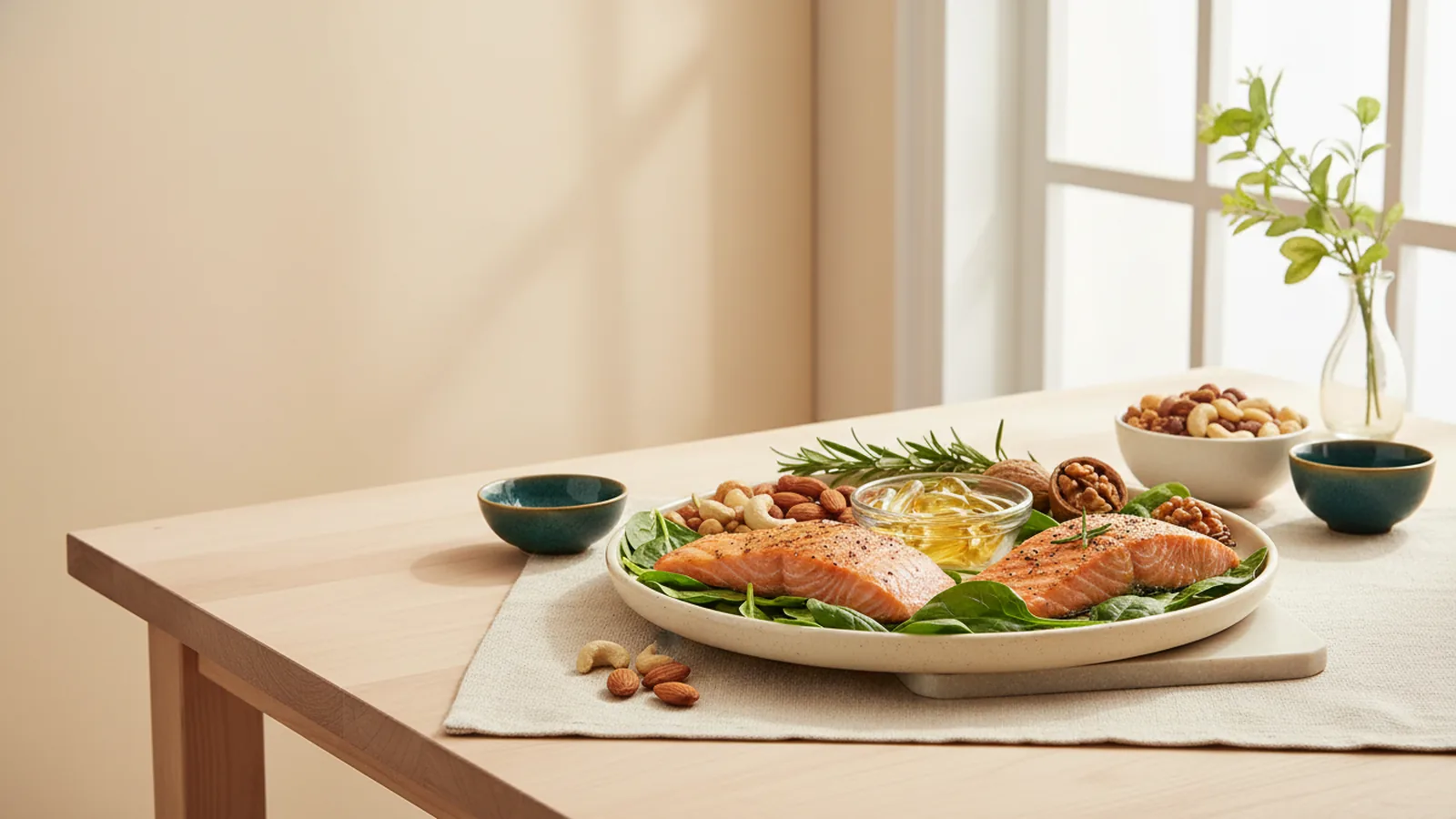

Eating healthily is not eating digestibly
A plate rich in vegetables, pulses, seeds, nuts, wholegrain starches and good oils has every appearance of balance. Yet it does not suit every digestive profile.
According to Coralie Béguin, a person who combines significant bloating, gas, abdominal pain, high stress, constipation, diarrhoea, reflux or delayed gastric emptying does not have the digestive capacity to absorb this load. Conversely, a person with stable transit, little stress and no digestive symptoms often tolerates a diet richer in fibre, volume or fat.
She gives the example of the classically taught plate, 50% cooked vegetables, 25% animal protein, 25% wholegrain starches: consistent on paper, but too high in fibre for a profile with gastroparesis, diarrhoea or marked bloating. The same goes for the breakfast so prominent on social media, plant-based drink, flakes, chia seeds, nut butter and red berries, which suits certain goals and is poorly tolerated where fermentation is an issue.
The point, then, is not to apply a universal dietary theory, but to adjust the plate to the person's actual digestive capacity at the time.
The 5 most common mistakes
1. Insufficient protein intake
Many people eat too little protein. Yet, Coralie Béguin points out, protein supports intestinal function, the production of neurotransmitters via amino acids, the production of hydrochloric acid and digestion as a whole. Insufficient intake weakens digestive balance upstream of everything else.
2. Too much or too little fibre
Fibre does not suit everyone, nor every quantity. One person tolerates 50 g of fibre, another far more. As soon as the quantity exceeds the digestive capacity of the moment, bloating, discomfort, disrupted transit and slow digestion appear. A very high vegetable intake, even on a low-FODMAP basis, does not always suit sensitive profiles: 300 to 400 g of courgettes per meal is still a load, whatever the vegetable's label.
3. Too few or too many carbohydrates
Carbohydrate remains a fuel. Cutting it out and eating too much of it both create an imbalance. The type of starch is chosen according to the profile: with chronic diarrhoea, wholegrain often does not suit; with constipation without bloating, wholegrain may go down better; with significant bloating, refined or semi-wholegrain is sometimes better tolerated.
4. Snacking
This is the point Coralie Béguin stresses most. Snacking interrupts digestive rest, constantly restarts the enzymatic process and stops the peristaltic wave from doing its sweep between meals. She compares the digestive tract to a runner: without a rest phase, the stomach and intestine wear out, and the terrain becomes favourable to bacterial and fungal overgrowth.
"Healthy" snacking counts too: almonds, fruit, berries, nuts, small repeated snacks, but also coffee, tea and flavoured drinks taken between meals. In her experience, cutting out snacking and returning to three meals a day, possibly with one snack, already clearly improves symptoms before any fine-tuning of the plate.
5. Getting lost in dietary trends
Gluten-free, lactose-free, oxalate-free, no animal protein, intermittent fasting, low-FODMAP: the approaches keep multiplying. They have their place in specific contexts, but they do not replace observation of the terrain, that is, symptoms, transit, history, sleep, stress, chewing, pace of life, quantities and cooking methods.
The 3 pillars of an individualised digestible diet
1. Reconstruct the actual day of eating
Before any strategy, you need to know what the person really eats. Coralie Béguin reconstructs two to three typical days in detail: times, meal splitting, snacking, drinks, way of eating, quantities, trigger foods, cooking methods, physical activity, sleep, stress and restrictions already in place.
She describes the case of a client who came with two breath tests, a full thyroid panel, a hormone panel and many supplements already being taken, while the reconstruction of her day showed a coffee at 9 am, a few almonds at 10.30 am and other intakes in between: digestive rest no longer existed. A test never tells you how the person eats.
2. Individualise according to the digestive profile
A digestible diet often rests on three meals a day, with a snack depending on the profile. The plate is then adjusted to satiety, the tendency to snack, bloating, constipation, diarrhoea, gastric heaviness, tolerance of fibre and fat, the ability to digest protein, the nutritional goal and the level of physical activity.
An important point: the plate evolves. A person may start at 40 g of cooked vegetables per meal, then increase by 10 to 20 g in steps of four to five days depending on tolerance. They do not stay on the starting quantities for life.
3. Adjust to the overall context
The digestive profile also depends on where the person lives, the climate, stress, the environment, history, sleep, hormonal function, age, physical activity, current treatments and nutritional needs. According to Coralie Béguin, the same plate does not behave the same way in a cold, damp climate as in a hot, dry one. Context matters as much as content.
Reading symptoms: timing matters more than the symptom
The useful question in consultation is not whether bloating points to dysbiosis, a lack of enzymes or an intolerance. It is when the person bloats. Coralie Béguin points out that naturopathy makes no diagnosis: this grid serves to guide the questioning, not to reach a conclusion.
- Bloating straight after the meal: points towards the gastric level. Look at chewing, excess fibre, the amount of protein, how rich and how fast the meal is, and the share of fat.
- Swollen belly at the end of the day: explore fermentation, digestive stagnation, gas, sensitivity to fibre, transit disorders and the cumulative food load over the day.
- Flat belly in the morning, swollen in the evening: gradual build-up linked to meals, snacking or digestive capacity.
- Belly already swollen on waking: look at the evening meal, snacking, digestive rest and stress.
- Heaviness in the stomach for hours: meals that are too large, excess fat, insufficient chewing, early satiety, nausea, unsuitable meal splitting.
She also stresses precision in history-taking: when a person says "animal protein at lunch", you need to know whether it is chicken breast or sardines in oil. The answer changes the analysis.
The 4 supplements she uses most in her practice
These choices are the speaker's own, presented as field experience, and do not constitute a Simplycure recommendation.
Fig tree bud
It acts on the gastric sphere and, in her view, suits hypochlorhydria as well as hyperacidity, which avoids having to decide between the two. She favours it particularly for stress-related complaints, bloating, reflux, heaviness and digestive reactions triggered by emotions or a deadline. In gemmotherapy, she describes a three-month course, 15 drops morning and evening before meals.
Bitter herb complex
Used for gas, bloating, a tight belly, discomfort, a feeling of stagnation and slow digestion. It also supports the stomach in people with a slight hydrochloric acid deficit, the challenge being to restimulate without aggravating reflux. She describes rather a one-month course, one week off, repeatable.
Digestive enzymes
Taken with lunch and dinner, for heaviness after meals, when the meal "sits" on the stomach, when travelling, or when the diet is occasionally richer than usual.
Chlorophyll
She associates it with bacterial and fungal overgrowth, a history of candidiasis or small intestinal overgrowth, bad breath, foul-smelling gas, bloating and some stubborn cases of constipation. She also notes an effect on vitality in tired people, and points out that it is a mild draining agent, to be checked against the profile.
Coffee, herbal teas and digestive rest
Asked about coffee, Coralie Béguin is clear: the migrating motor complex stops as soon as you eat or drink anything other than water. Coffee and tea taken mid-morning therefore interrupt digestive rest just as a snack does. Even herbal teas can interrupt it, if only through their taste. Her position: water between meals and, when still water goes down poorly, a hydrosol to flavour it.
She adds a point of method: before cutting something out, find out why the person snacks. Emotional load, the composition of the plates or their quantity often explain the behaviour. She also asks the person to rate from 1 to 10 their ability to put the change in place; below a certain threshold, the advice will not be followed.
When functional tests have their place
Observation of diet and symptoms remains the priority. Tests come afterwards, if needed: lactulose breath test for small intestinal overgrowth, bile acids, full thyroid panel, and broader panels depending on the context.
On Helicobacter pylori after failed antibiotic therapy, she mentions the possible use of certain essential oils such as oregano, with caution, and above all the fact that the work does not stop there: diet, symptoms, the gastric sphere, the stomach's mucus and phases of digestive rest also need to be reviewed.
Finally, on highly mineralised waters and electrolytes, she urges caution in people who bloat or whose gastric emptying is delayed, and prefers liquid or ionised forms to multiple capsules when the digestive tract already struggles with the load of supplements.
Key takeaways
In chronic digestive disorders, no universal rule holds. What does hold, according to Coralie Béguin: observing the actual day, individualisation, digestive rest, tolerance measured rather than assumed, a plate that evolves in steps, and consistency between symptoms and diet.
A digestible diet does not follow a theory. It adjusts to the person, to their digestion and to their daily life.
Prescribe and follow up your recommendations on Simplycure
Simplycure brings together on one platform the protocols, supplementation plans and products of more than 250 brands, with the technical data sheets that let you compare forms and dosages. You build your recommendation, your patient orders in one click. Sign-up is free for practitioners.