Description
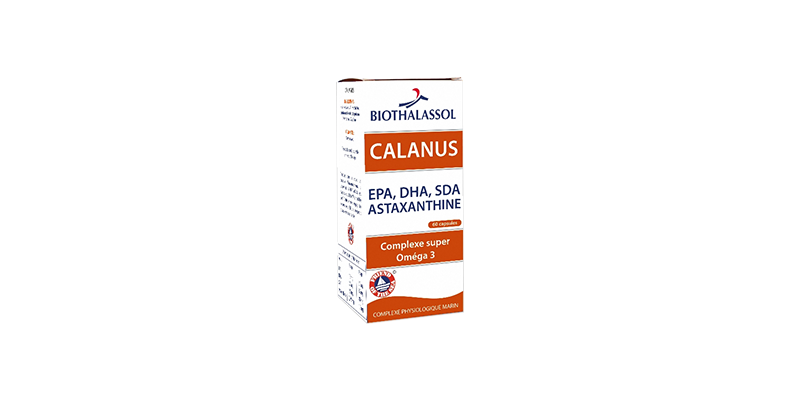
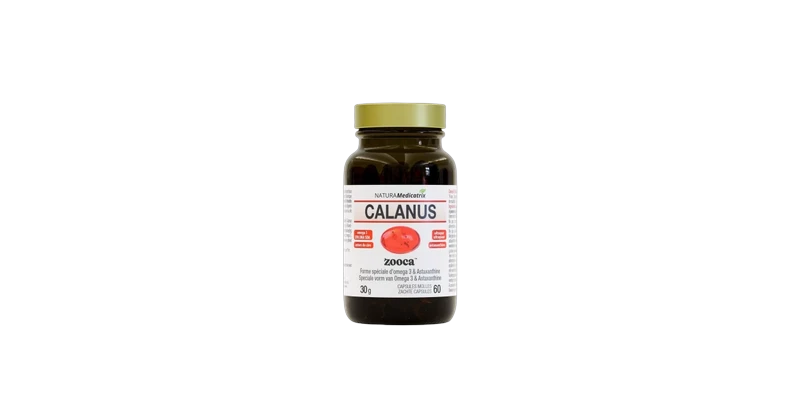
CALANUS CALANUS is a complex rich in essential Omega-3 fatty acids, standardised for DHA, EPA, SDA (EPA precursor), and astaxanthin. Calanus oil contains a highly assimilable form of omega-3 fatty acids, the wax ester form. √ Calanus represents a comprehensive lipid extract from the small crustacean known as Calanus finmarchicus, a herbivorous copepod that feeds on marine phytoplankton, thereby protecting it from any contamination by heavy metals and other pollutants (constituting the first link in the food chain). It is the most prolific animal species on the planet, constituting the predominant zooplankton in the North Atlantic Ocean, off the Norwegian coast. √ These marine copepods are able to build up significant lipid reserves, mainly in the form of wax esters, which can be gently extracted without the use of solvents or purification processes (entirely natural). These wax esters show notable stability compared with the traditional polyunsaturated fatty acids found in fish oil or krill oil. √ Unlike fish oil or krill oil, the slow digestion of wax esters from Calanus allows them to reach a more distant region of your intestine, the end of the ileum, where they stimulate certain receptors that fish or krill oils cannot reach. √ Optimised assimilation: wax esters are digested slowly, allowing them to be better assimilated: the quality of omega-3 in wax ester form is as important as the quantity of omega-3 ingested. Furthermore, in addition to providing the omega-3s EPA and DHA, Calanus oil is an excellent source of SDA, which is easily converted to EPA in the body, and of cetoleic acid (omega-11), which also facilitates the conversion of precursor omega-3s into active forms in the body. √ This abundance of wax esters sets it apart from other forms of omega-3. √ Calanus finmarchicus is a zooplankton with a one-year life cycle and represents an enormous marine biological resource. Stock assessments indicate an annual production of around 290 times greater than the total biomass of all fish species in the same area, including cod, herring and mackerel.
<style>.sc-desc{color:#3F524A;font-size:16px;line-height:1.65}.sc-desc__lead{max-width:72ch}.sc-desc__lead p{margin:0 0 14px}.sc-desc__lead p:first-child{font-size:18px;color:#14342B}.sc-desc__card{background:#fff;border:1px solid #E6EAE6;border-radius:14px;padding:22px 24px;margin-top:22px;box-shadow:0 1px 2px rgba(20,52,43,.04)}.sc-desc__card--claims{background:#F7FAF7;border-color:#DBE5DE}.sc-desc__h{margin:0 0 12px;font-size:17px;font-weight:700;color:#14342B;letter-spacing:-.01em}.sc-desc__p{margin:0 0 12px}.sc-desc__p:last-child{margin-bottom:0}.sc-desc__checks{list-style:none;margin:0;padding:0}.sc-desc__checks li{position:relative;padding:7px 0 7px 32px}.sc-desc__checks li::before{content:'';position:absolute;left:0;top:10px;width:20px;height:20px;border-radius:50%;background:#EDF2EE url("data:image/svg+xml,%3Csvg%20xmlns='http://www.w3.org/2000/svg'%20viewBox='0%200%2024%2024'%20fill='none'%20stroke='%231F6B4F'%20stroke-width='3.2'%20stroke-linecap='round'%20stroke-linejoin='round'%3E%3Cpath%20d='M5%2012.5l4.2%204L19%207'/%3E%3C/svg%3E") center/11px 11px no-repeat}.sc-desc__dots{margin:0;padding-left:20px}.sc-desc__dots li{padding:3px 0}.sc-desc__callout{display:flex;gap:14px;background:#EEF4F2;border:1px solid #D8E5E0;border-radius:12px;padding:18px 20px;margin-top:22px}.sc-desc__callout--care{background:#FBF6EC;border-color:#ECDDBE}.sc-desc__callout--care .sc-desc__h{color:#7E6418}.sc-desc__callout__icon{flex:0 0 auto;width:26px;height:26px;border-radius:50%;background:#1F6B4F;color:#fff;font-weight:700;font-size:15px;line-height:26px;text-align:center}.sc-desc__callout--care .sc-desc__callout__icon{background:#C99A2E}.sc-desc__callout .sc-desc__h{margin-bottom:8px}</style><div class="sc-desc"><section class="sc-desc__card"><h3 class="sc-desc__h">CALANUS</h3><p class="sc-desc__p">CALANUS is a complex rich in essential Omega-3 fatty acids, standardised for DHA, EPA, SDA (EPA precursor), and astaxanthin. Calanus oil contains a highly assimilable form of omega-3 fatty acids, the wax ester form.</p><ul class="sc-desc__dots"><li>Calanus represents a comprehensive lipid extract from the small crustacean known as Calanus finmarchicus, a herbivorous copepod that feeds on marine phytoplankton, thereby protecting it from any contamination by heavy metals and other pollutants (constituting the first link in the food chain). It is the most prolific animal species on the planet, constituting the predominant zooplankton in the North Atlantic Ocean, off the Norwegian coast.</li><li>These marine copepods are able to build up significant lipid reserves, mainly in the form of wax esters, which can be gently extracted without the use of solvents or purification processes (entirely natural). These wax esters show notable stability compared with the traditional polyunsaturated fatty acids found in fish oil or krill oil.</li><li>Unlike fish oil or krill oil, the slow digestion of wax esters from Calanus allows them to reach a more distant region of your intestine, the end of the ileum, where they stimulate certain receptors that fish or krill oils cannot reach.</li><li>Optimised assimilation: wax esters are digested slowly, allowing them to be better assimilated: the quality of omega-3 in wax ester form is as important as the quantity of omega-3 ingested. Furthermore, in addition to providing the omega-3s EPA and DHA, Calanus oil is an excellent source of SDA, which is easily converted to EPA in the body, and of cetoleic acid (omega-11), which also facilitates the conversion of precursor omega-3s into active forms in the body.</li><li>This abundance of wax esters sets it apart from other forms of omega-3.</li><li>Calanus finmarchicus is a zooplankton with a one-year life cycle and represents an enormous marine biological resource. Stock assessments indicate an annual production of around 290 times greater than the total biomass of all fish species in the same area, including cod, herring and mackerel.</li></ul></section></div>