Description
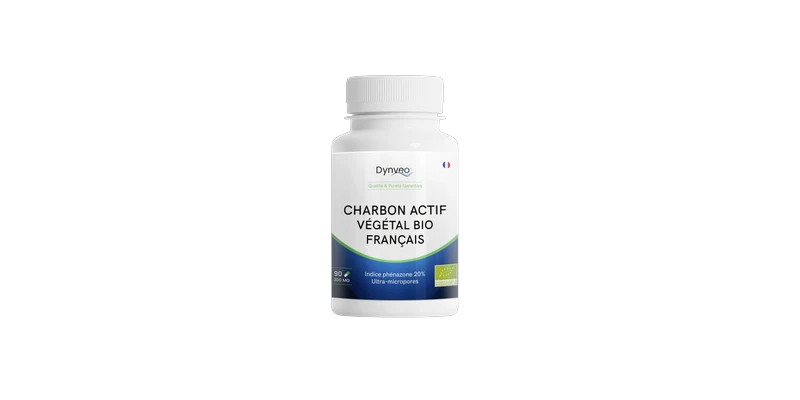
WHAT IS PLANT CHARCOAL? Plant charcoal has been recognised since Antiquity as a powerful natural treatment for intestinal disorders and intoxications. Its occasional use is also popular in cosmetics, oral hygiene and cooking. It most often comes in the form of an odourless, tasteless black powder, obtained from a calcination process of carbon-rich plant organic matter. Its effectiveness and mode of action rely on the presence of pores in its structure. When liquids or gases pass through activated charcoal, they bind to it through a process known as adsorption: this is the ability of a solid to fix molecules to its surface. This allows it to be a powerful intestinal adsorbent. Activated plant charcoal is included on the World Health Organisation's (WHO) list of essential medicines. It is used as a supplement in cases of flatulence, bloating, swollen stomachs and difficult digestion. Indeed, it has the ability to adsorb gases, molecules, intestinal toxins or bacterial secretions in the gastrointestinal tract. It is then eliminated from the body without being metabolised or interfering with digestive enzymes. To purchase an effective and safe product, particular attention should be paid to pore size as well as the manufacturing process. HIGHLIGHTS √ 100% French origin: Dordogne √ Responsible production method √ Ultra-micropores at 0,5 nm √ Adsorption surface area > 800 m2/g A 100% natural manufacturing process There are two manufacturing processes for producing activated plant charcoal: chemical activation and physical activation. The latter is preferable, as this technique is natural and more environmentally friendly. In addition, physical activation allows precise control of pore size and therefore the production of micropores, mainly ultra-micropores ( Dynveo offers an organic activated plant charcoal resulting from physical activation with water vapour, in line with its values. They therefore avoid the use of chemical products and offer a natural product with the most effective pore size.