Description
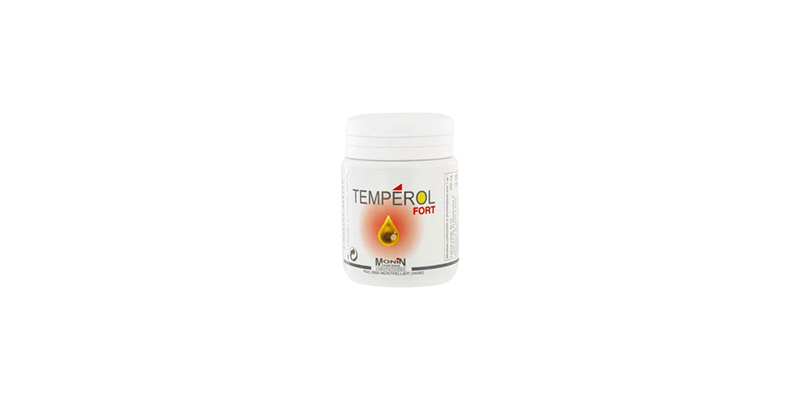
Tempérol Fort is a supplement based on a complex of active ingredients combining monacolin K, derived from red yeast rice, coenzyme Q10 and policosanol, extracted from sugar cane. The Monin Chanteaud brand intends it as a complement to the daily diet, with the aim of maintaining good regulation of blood cholesterol levels. What is red yeast rice? Scientifically designated by its Latin name Monascus purpureus, red yeast rice is a microscopic fungus that naturally colonises rice, even though it is now more often the subject of deliberate cultivation. The reason lies in the fact that this yeast has been attributed potential benefits due to the presence of fatty acids, phytosterols, isoflavones as well as monacolin K in its composition. And the latter is said to offer interesting benefits with regard to cholesterol levels thanks to its lipid-lowering effect, which is said to cause a reduction in its intracellular synthesis. Several studies, carried out independently of one another, tend to confirm initial positive conclusions regarding the impact of supplementing with nutritional compounds including monacolin K (sometimes combined with coenzyme Q10) on metabolic syndrome. Ubiquinone, another name for coenzyme Q10, is an active substance similar to a fat-soluble vitamin, whose role is central to the release of cellular energy in the vast majority of living beings. It is notably described as an antioxidant and has shown fairly promising results in experiments aiming to determine its involvement in the activation of a macrophage protein. It would thus promote the clearing of cholesterol attached to the artery walls and would thereby reduce the risk of developing atherosclerosis. The Tempérol formula finally contains policosanol, derived from the waxy part of sugar cane, which is also valued for its properties associated with cholesterol and hypertension. It has in fact been the subject of various studies aiming to demonstrate its influence on reducing low-density lipoproteins, meaning “bad cholesterol”, and raising levels of high-density lipoproteins, in other words “good cholesterol”. What is cholesterol and how can it be controlled? Contrary to popular belief, having cholesterol is not necessarily a sign of poor health; in a certain sense it is even vital to numerous organic metabolisms. It is even secreted by the body as a precursor for the secretion of certain hormones or to reinforce the structure of the cell membrane. The only drawback of this fatty substance lies in the plurality of its forms and sources, since it can also be provided by diet, particularly foods rich in saturated fatty acids such as butter, fried meat, cheese or ready-made meals. Within the body, cholesterol takes on two distinct forms: high-density lipoproteins (HDL), referred to as good cholesterol, and low-density lipoproteins (LDL), pointed to as bad cholesterol. In a normally functioning body, HDL contributes to regulating LDL by collecting LDL and carrying it to the liver for elimination. However, in the event of excess bad cholesterol, it deposits on the artery walls and threatens to reduce their diameter over time, with the eventual risk of more or less serious cardiovascular disorders. This is why it is strongly recommended, especially for people getting older, to rebalance their diet and focus on foods that promote good cholesterol, such as oily fish, dried fruit, almonds, walnuts, avocado, olive oil (raw or lightly cooked), cereals and seeds. And as always, it is also advisable to engage in physical activity, or failing that, to make a point of walking a long distance at least once a day.
<style>.sc-desc{color:#3F524A;font-size:16px;line-height:1.65}.sc-desc__lead{max-width:72ch}.sc-desc__lead p{margin:0 0 14px}.sc-desc__lead p:first-child{font-size:18px;color:#14342B}.sc-desc__card{background:#fff;border:1px solid #E6EAE6;border-radius:14px;padding:22px 24px;margin-top:22px;box-shadow:0 1px 2px rgba(20,52,43,.04)}.sc-desc__card--claims{background:#F7FAF7;border-color:#DBE5DE}.sc-desc__h{margin:0 0 12px;font-size:17px;font-weight:700;color:#14342B;letter-spacing:-.01em}.sc-desc__p{margin:0 0 12px}.sc-desc__p:last-child{margin-bottom:0}.sc-desc__checks{list-style:none;margin:0;padding:0}.sc-desc__checks li{position:relative;padding:7px 0 7px 32px}.sc-desc__checks li::before{content:'';position:absolute;left:0;top:10px;width:20px;height:20px;border-radius:50%;background:#EDF2EE url("data:image/svg+xml,%3Csvg%20xmlns='http://www.w3.org/2000/svg'%20viewBox='0%200%2024%2024'%20fill='none'%20stroke='%231F6B4F'%20stroke-width='3.2'%20stroke-linecap='round'%20stroke-linejoin='round'%3E%3Cpath%20d='M5%2012.5l4.2%204L19%207'/%3E%3C/svg%3E") center/11px 11px no-repeat}.sc-desc__dots{margin:0;padding-left:20px}.sc-desc__dots li{padding:3px 0}.sc-desc__callout{display:flex;gap:14px;background:#EEF4F2;border:1px solid #D8E5E0;border-radius:12px;padding:18px 20px;margin-top:22px}.sc-desc__callout--care{background:#FBF6EC;border-color:#ECDDBE}.sc-desc__callout--care .sc-desc__h{color:#7E6418}.sc-desc__callout__icon{flex:0 0 auto;width:26px;height:26px;border-radius:50%;background:#1F6B4F;color:#fff;font-weight:700;font-size:15px;line-height:26px;text-align:center}.sc-desc__callout--care .sc-desc__callout__icon{background:#C99A2E}.sc-desc__callout .sc-desc__h{margin-bottom:8px}</style><div class="sc-desc"><div class="sc-desc__lead"><p>Tempérol Fort is a supplement based on a complex of active ingredients combining monacolin K, derived from red yeast rice, coenzyme Q10 and policosanol, extracted from sugar cane. The Monin Chanteaud brand intends it as a complement to the daily diet, with the aim of maintaining good regulation of blood cholesterol levels.</p><p>Scientifically designated by its Latin name Monascus purpureus, red yeast rice is a microscopic fungus that naturally colonises rice, even though it is now more often the subject of deliberate cultivation. The reason lies in the fact that this yeast has been attributed potential benefits due to the presence of fatty acids, phytosterols, isoflavones as well as monacolin K in its composition. And the latter is said to offer interesting benefits with regard to cholesterol levels thanks to its lipid-lowering effect, which is said to cause a reduction in its intracellular synthesis. Several studies, carried out independently of one another, tend to confirm initial positive conclusions regarding the impact of supplementing with nutritional compounds including monacolin K (sometimes combined with coenzyme Q10) on metabolic syndrome.</p><p>Ubiquinone, another name for coenzyme Q10, is an active substance similar to a fat-soluble vitamin, whose role is central to the release of cellular energy in the vast majority of living beings. It is notably described as an antioxidant and has shown fairly promising results in experiments aiming to determine its involvement in the activation of a macrophage protein. It would thus promote the clearing of cholesterol attached to the artery walls and would thereby reduce the risk of developing atherosclerosis.</p><p>The Tempérol formula finally contains policosanol, derived from the waxy part of sugar cane, which is also valued for its properties associated with cholesterol and hypertension. It has in fact been the subject of various studies aiming to demonstrate its influence on reducing low-density lipoproteins, meaning “bad cholesterol”, and raising levels of high-density lipoproteins, in other words “good cholesterol”.</p><p>Contrary to popular belief, having cholesterol is not necessarily a sign of poor health; in a certain sense it is even vital to numerous organic metabolisms. It is even secreted by the body as a precursor for the secretion of certain hormones or to reinforce the structure of the cell membrane. The only drawback of this fatty substance lies in the plurality of its forms and sources, since it can also be provided by diet, particularly foods rich in saturated fatty acids such as butter, fried meat, cheese or ready-made meals.</p><p>Within the body, cholesterol takes on two distinct forms: high-density lipoproteins (HDL), referred to as good cholesterol, and low-density lipoproteins (LDL), pointed to as bad cholesterol. In a normally functioning body, HDL contributes to regulating LDL by collecting LDL and carrying it to the liver for elimination. However, in the event of excess bad cholesterol, it deposits on the artery walls and threatens to reduce their diameter over time, with the eventual risk of more or less serious cardiovascular disorders.</p><p>This is why it is strongly recommended, especially for people getting older, to rebalance their diet and focus on foods that promote good cholesterol, such as oily fish, dried fruit, almonds, walnuts, avocado, olive oil (raw or lightly cooked), cereals and seeds. And as always, it is also advisable to engage in physical activity, or failing that, to make a point of walking a long distance at least once a day.</p></div></div>